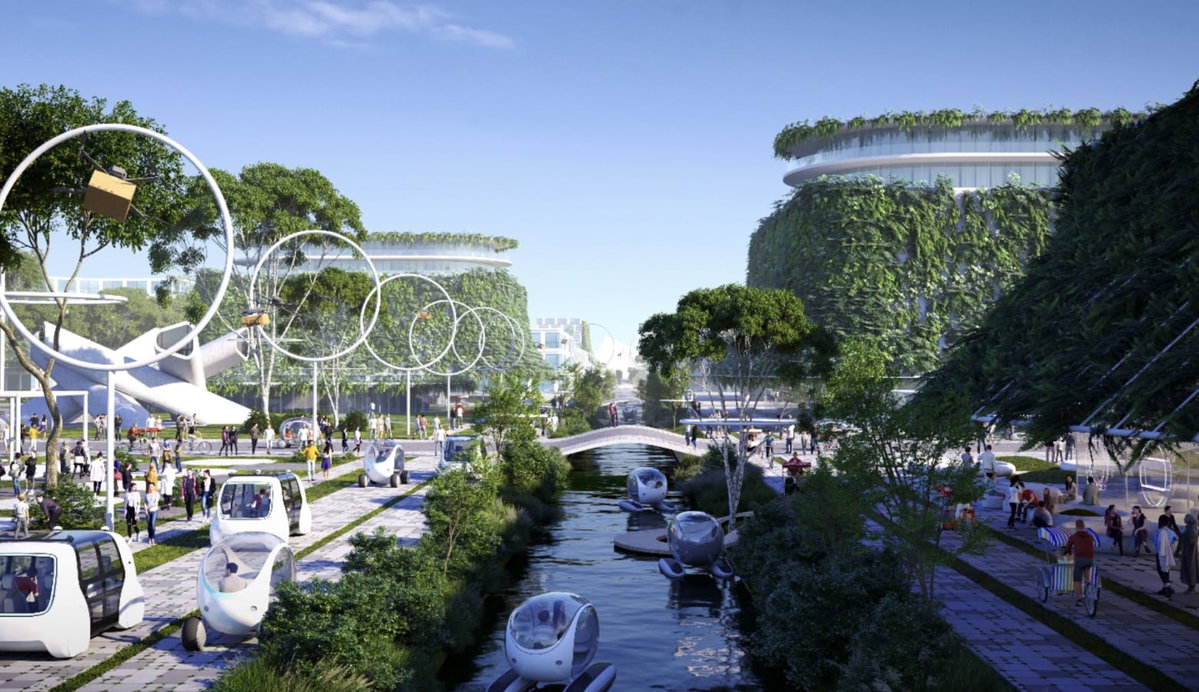
DESIGNING BIODIVERCITY: A MODEL FOR SUSTAINABLE URBANISM
Off the southern shore of Penang Island, Malaysia, the Penang State Government plans for 4,500 acres of three manmade islands to set a global example for sustainable urbanism. Using development as an opportunity to create new ecological systems, BIG, Hijjas and Ramboll’s vision for the Penang South Islands is designed to protect, preserve, and grow the rich biodiversity of Penang where land reclamation has destroyed the coastal habitats of one of the most biodiverse places in the world. Last year the UN reported that over 1 million species are at risk of extinction. Many of these species will be extinct over the next decade, driving their plan for the 2021-2030 UN Decade on Ecosystem Restoration to recover lost habitats and increase biodiversity globally. Biodiversity creates healthy ecosystems, and healthy ecosystems better withstand natural disasters, stabilize climate, provide water and food resources, and contribute to poverty alleviation. Put directly by UNESCO Director-General Audrey Azoulay, “protecting biodiversity amounts to protecting humanity.” The design and construction industry has significant strides to make to decrease our impact on the environment. Buildings and construction account for nearly 40% of energy-related carbon dioxide (CO2) emissions, and development not only has lasting impacts on water sources and air quality, but destroys natural habitats. In response, urban design should push the UN Sustainable Design Goals by creating places that do not just accommodate nature, but are fundamentally structured around building new ecological systems. Central to the approach for the vision for Penang South Islands is allowing biodiversity to shape the vision for the islands, while creating ecological, cultural and economic growth. These goals drove the design for BiodiverCity throughout the competition period that took place at the beginning of 2020, and continue to serve as the foundation for the project’s development. Penang Island, which accounts for most of Penang’s economic activity, has run out of land for safe development, open spaces and infrastructure including flood mitigation and new roads to address congestion. This has resulted in poorly sited ad-hoc and hill slope developments in the region. The Penang South Islands masterplan is an opportunity for a holistic approach to a vibrant community with a mix of high end and social housing, tourism, industrial and commercial land, public amenities and recreational spaces. At the beginning of the competition phase, the project team estimated the total carbon footprint, impact on habitat, and typical financial return of the masterplan if the project had been designed using conventional techniques. In turn, they defined ambitious, but achievable targets for these same metrics using new, innovative techniques to structure the project around habitat protection and development. Compared to a conventional development approach similarly scaled, BiodiverCity, allows for a reduction in carbon footprint by more than 50%; an increase in habitat value by more than 200%, and 5% additional return on profit margin through value-added.