
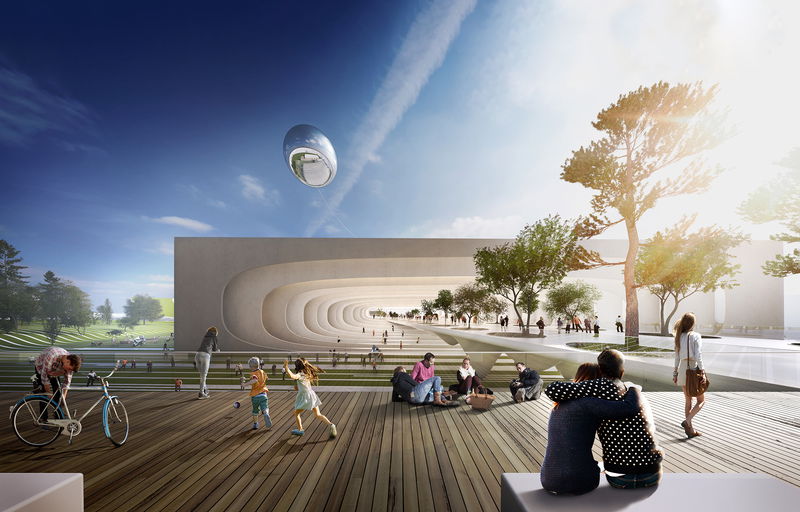

Europa City Expo Building
Gonesse, France
Client
Europa City | Alliages & Territoires
Typology
Culture
Size m2/ft2
34,000 / 365,976
Status
Idea

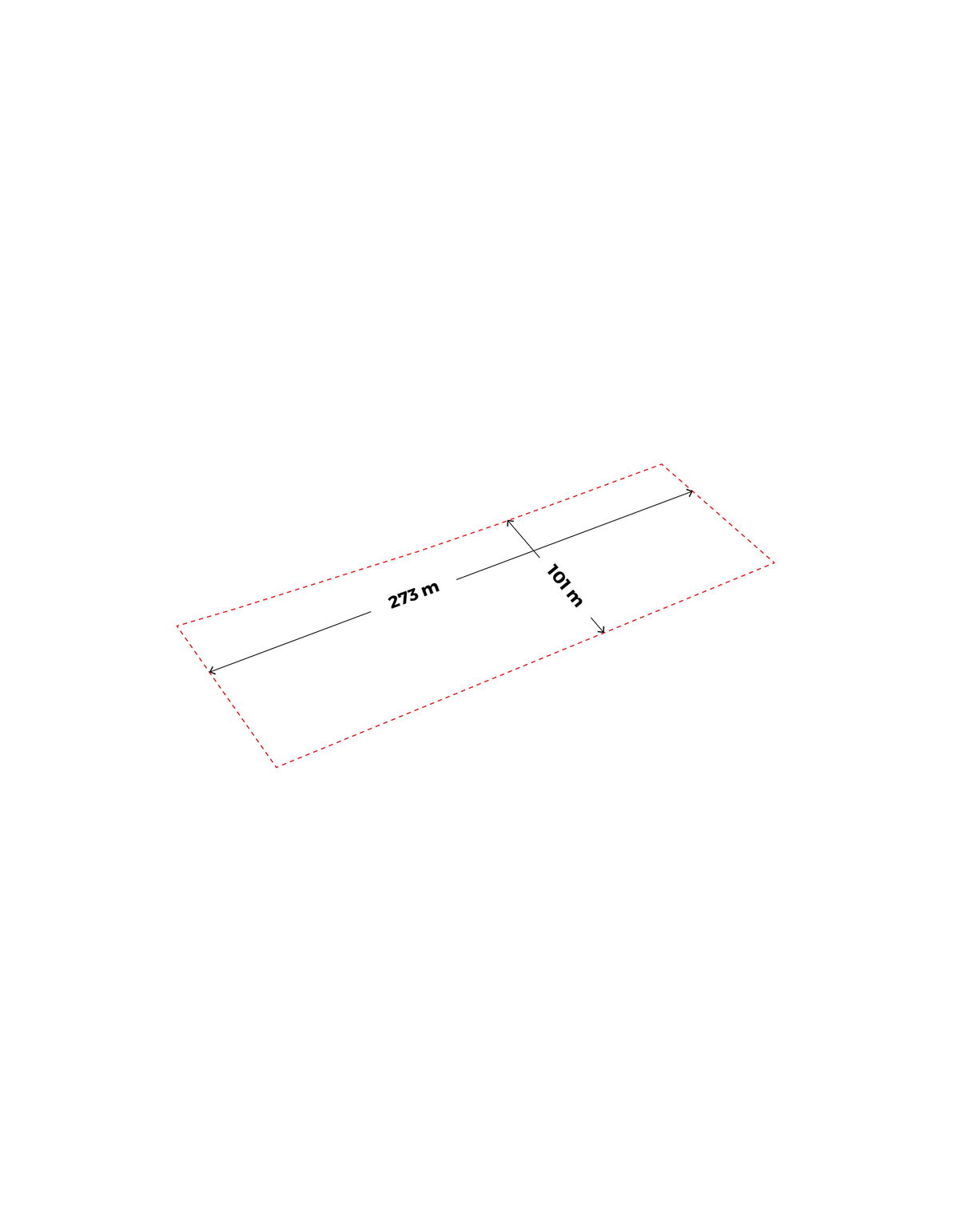
The Site — The exhibition hall program is approximately 32-35,000 m². It is spread over a total area of about 28,000 m² and is in a rectangle of 273 m x 101 m.
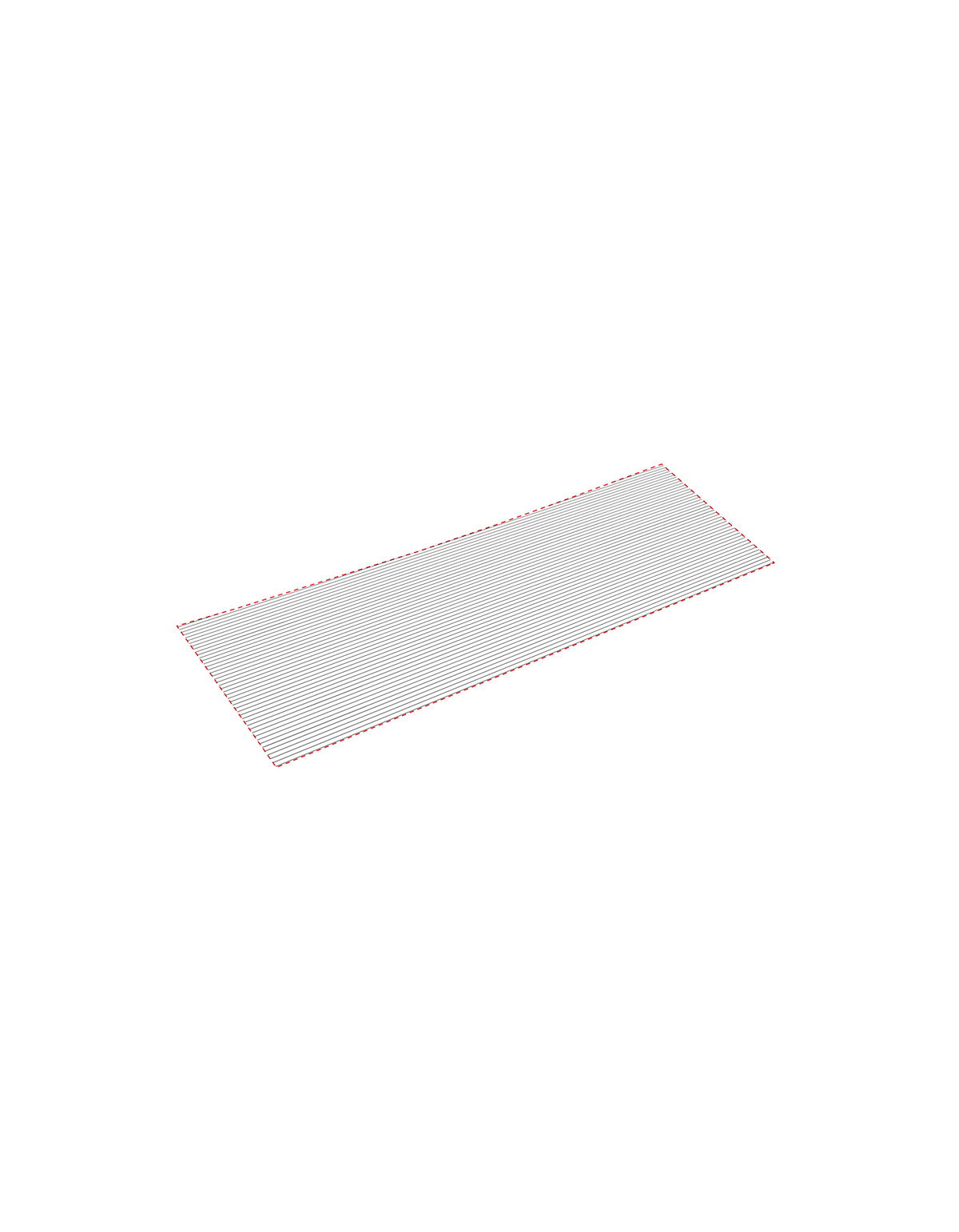
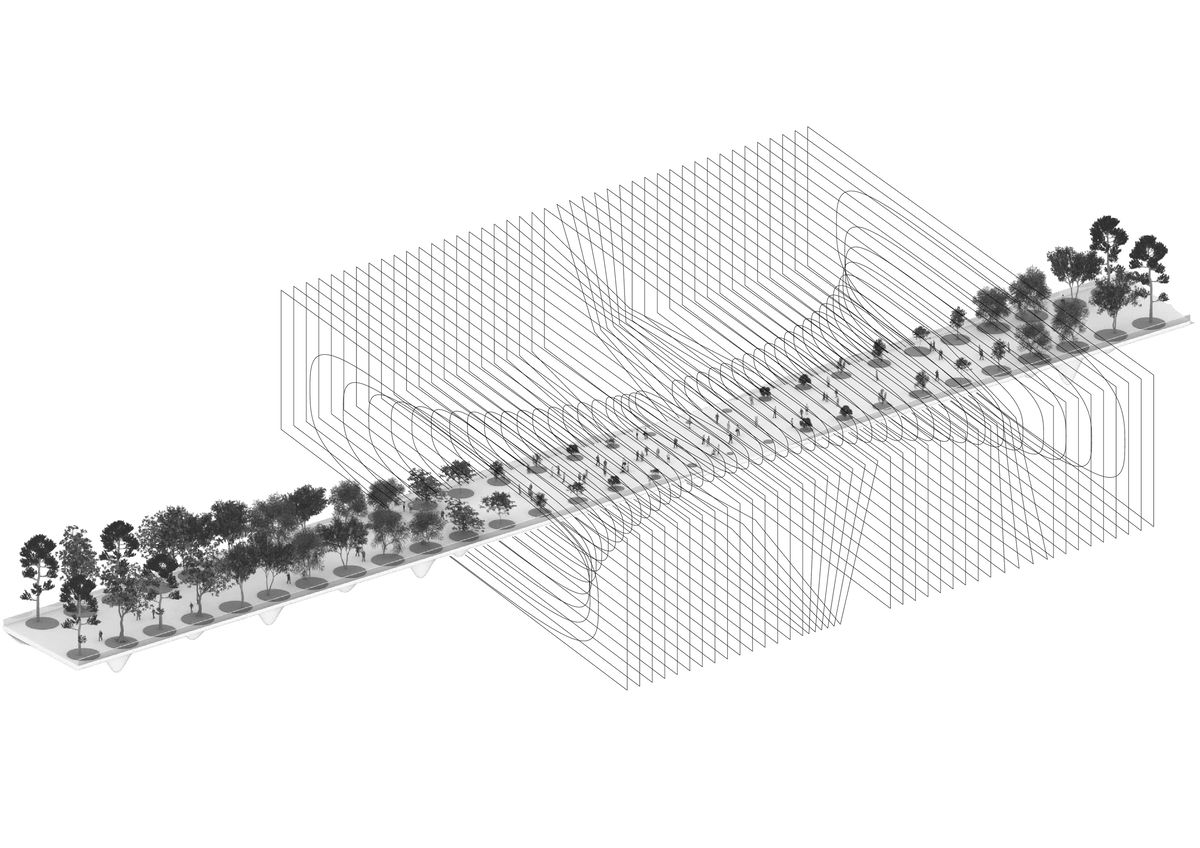
A Linear Landscape — All EuropaCity buildings follow the guidelines of the bands, which are oriented differently according to the different areas of the project. At the North of the BIP, they are distributed parallel to it, as if to echo it. They are conceptually expressed as landscape strips of concrete, between the train station’s belvedere and the BIP.
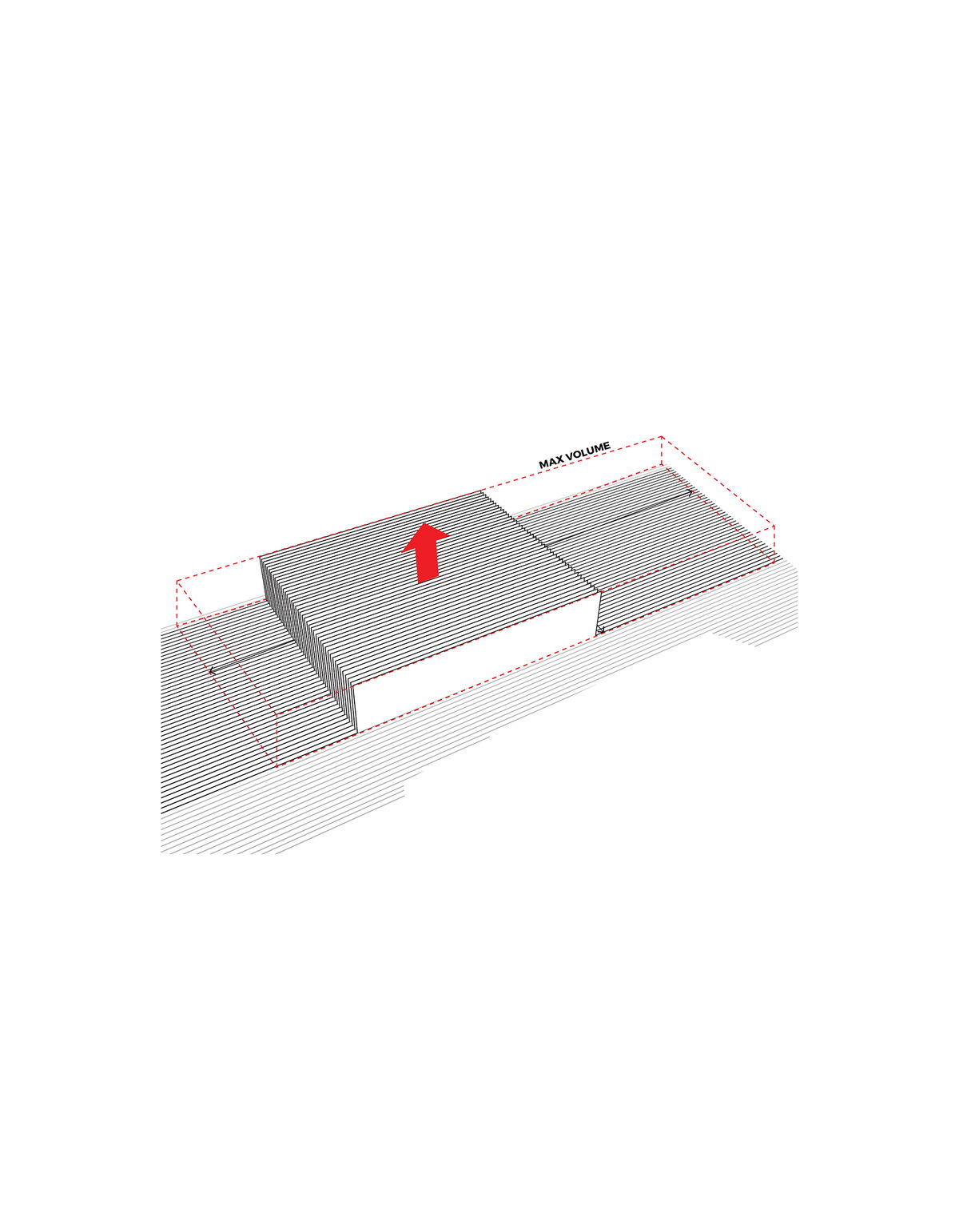
Emergence — Some of these strips emerge from the ground to become a volume. It begins immediately at the North of the BIP, to create a built façade on the BIP and extends all the way to the northern limit of the site.
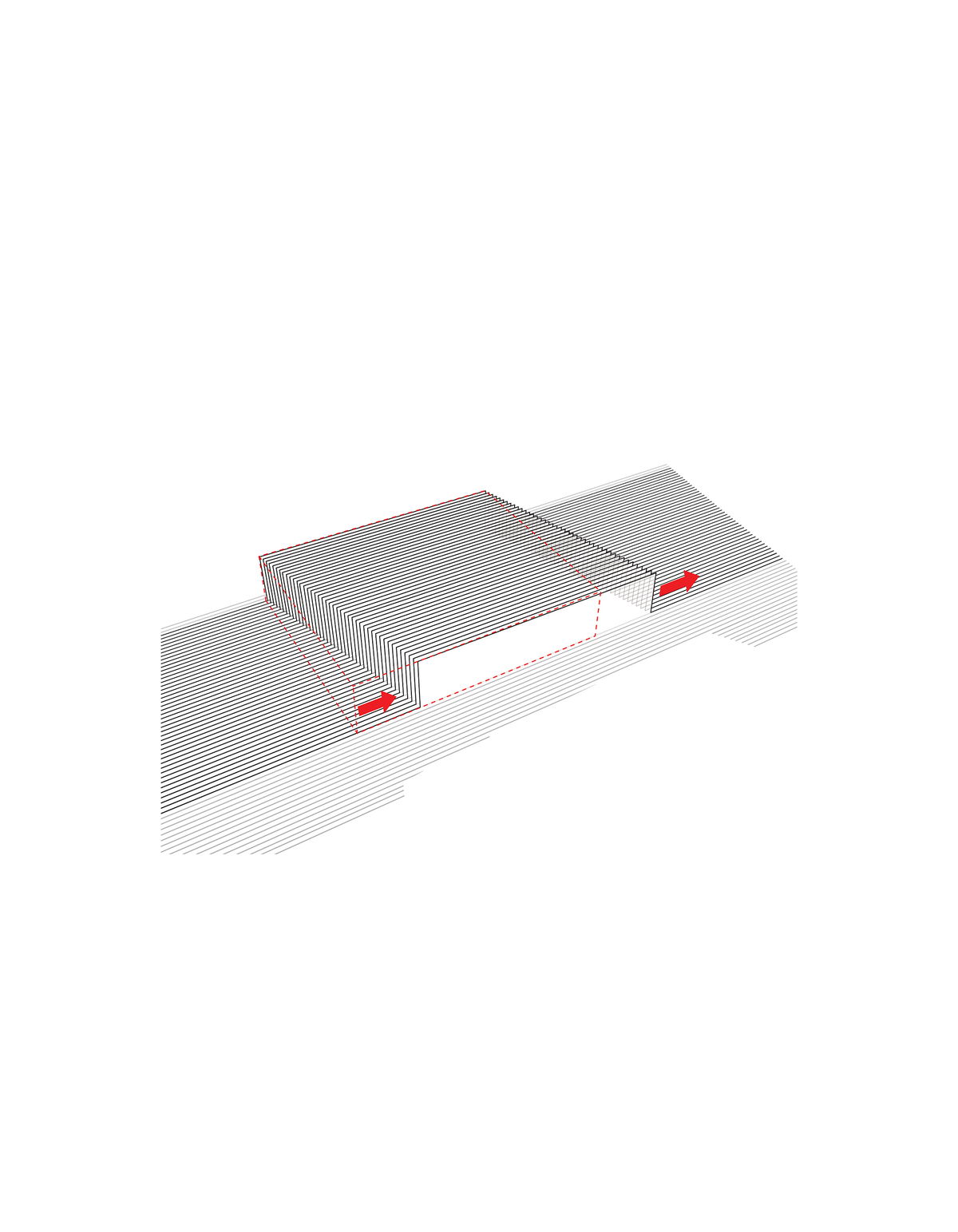
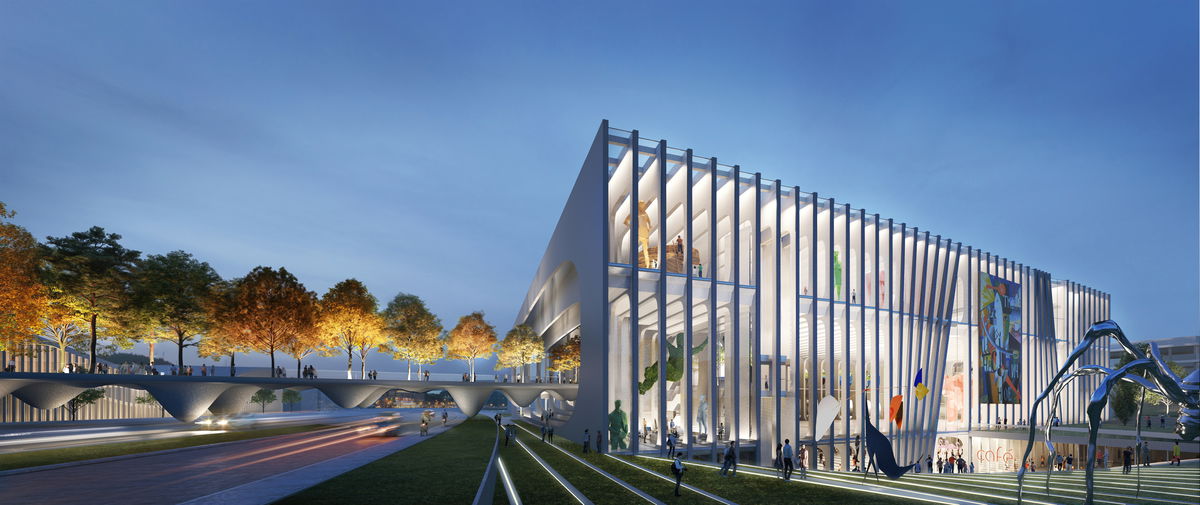
Adaptation to the Site — In plan, the North face of the building is slightly displaced to the West. The resulting geometry is a parallelogram shape that completely resolves the incongruence between the perimeter of the site and the axis of the bridge.
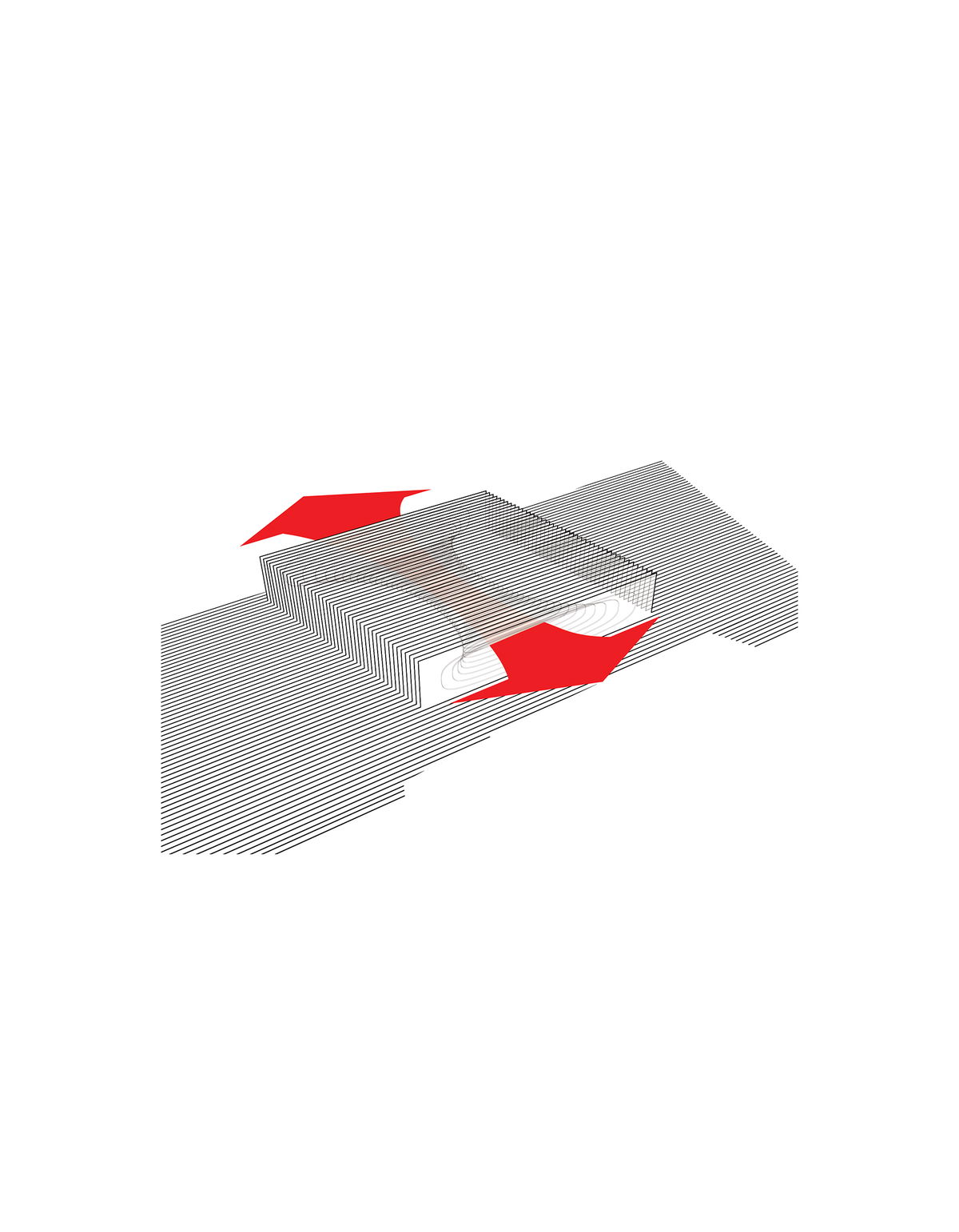
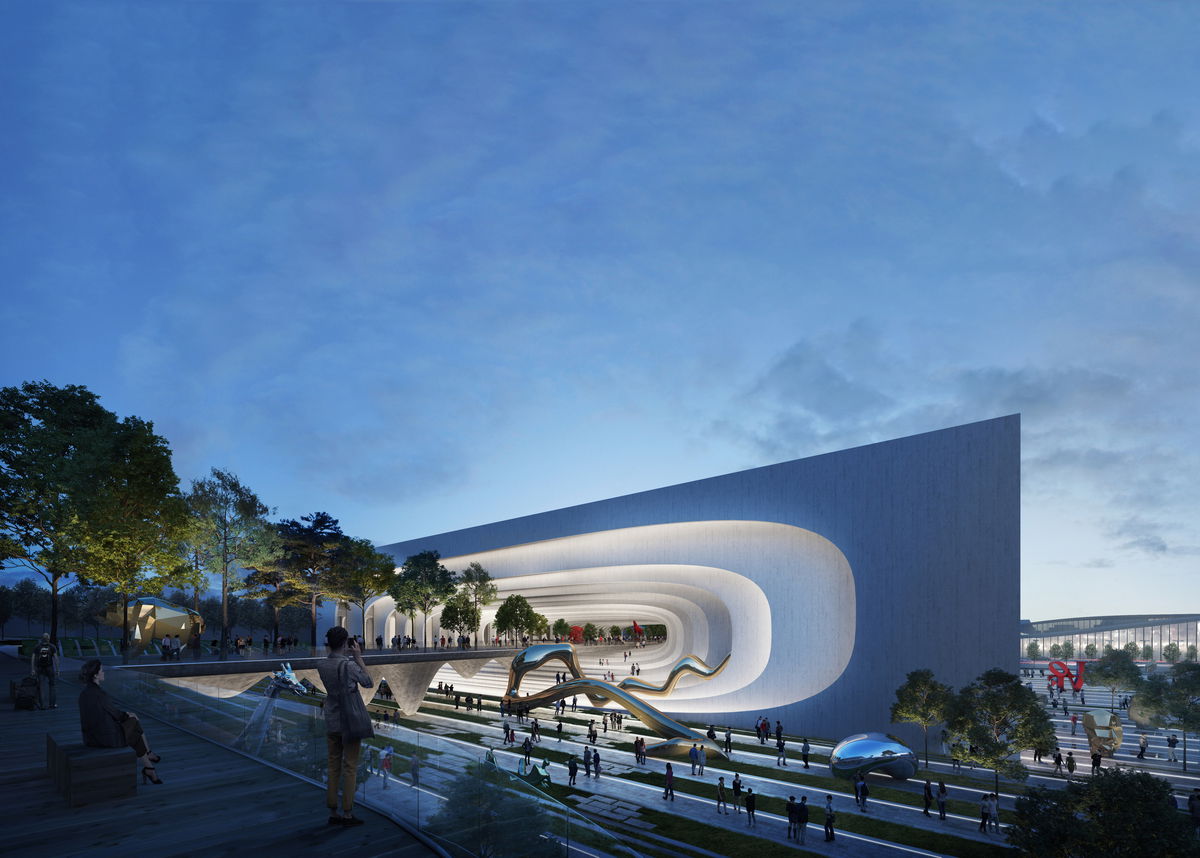
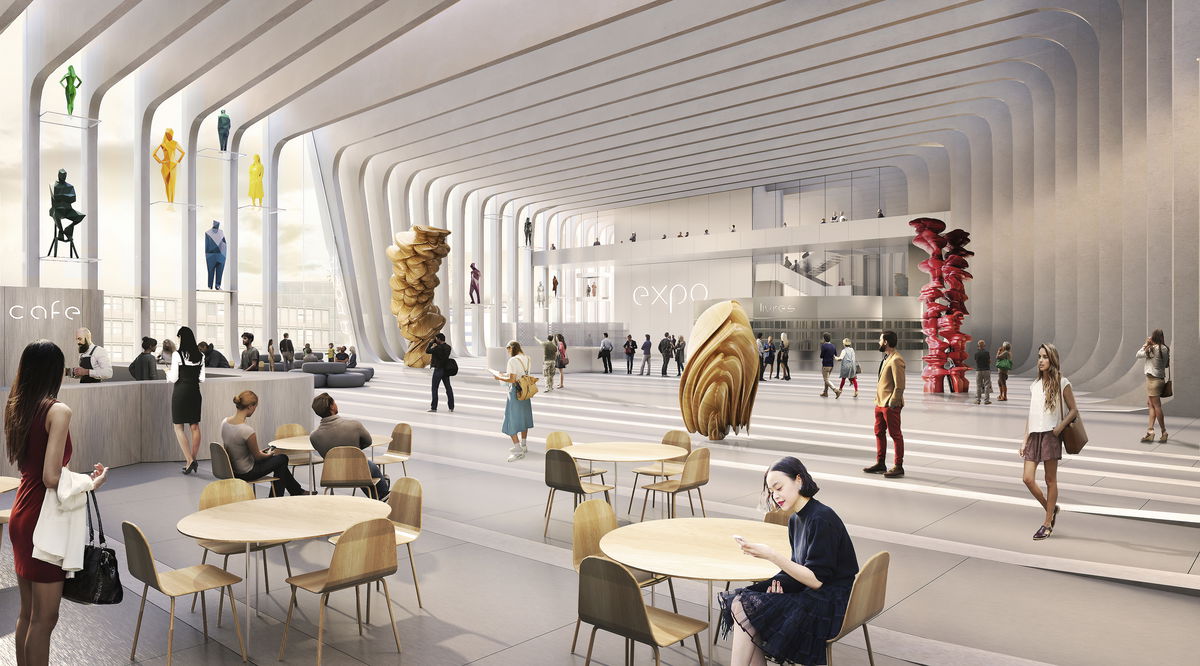
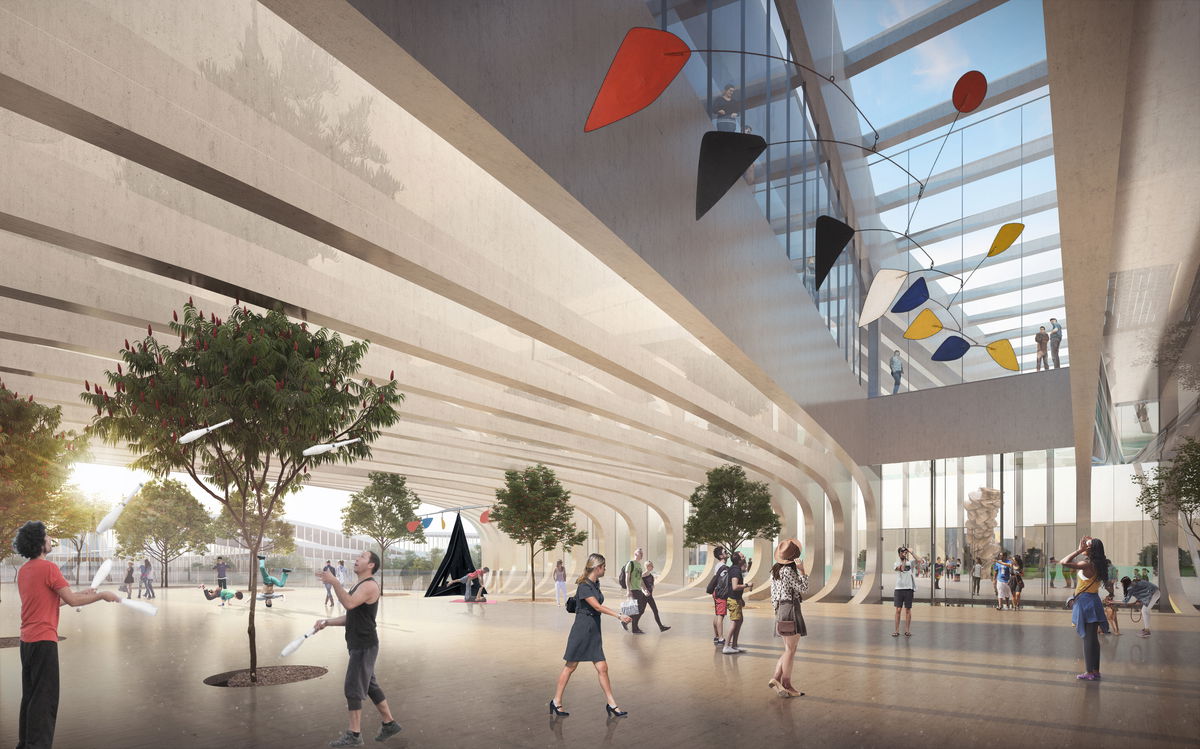
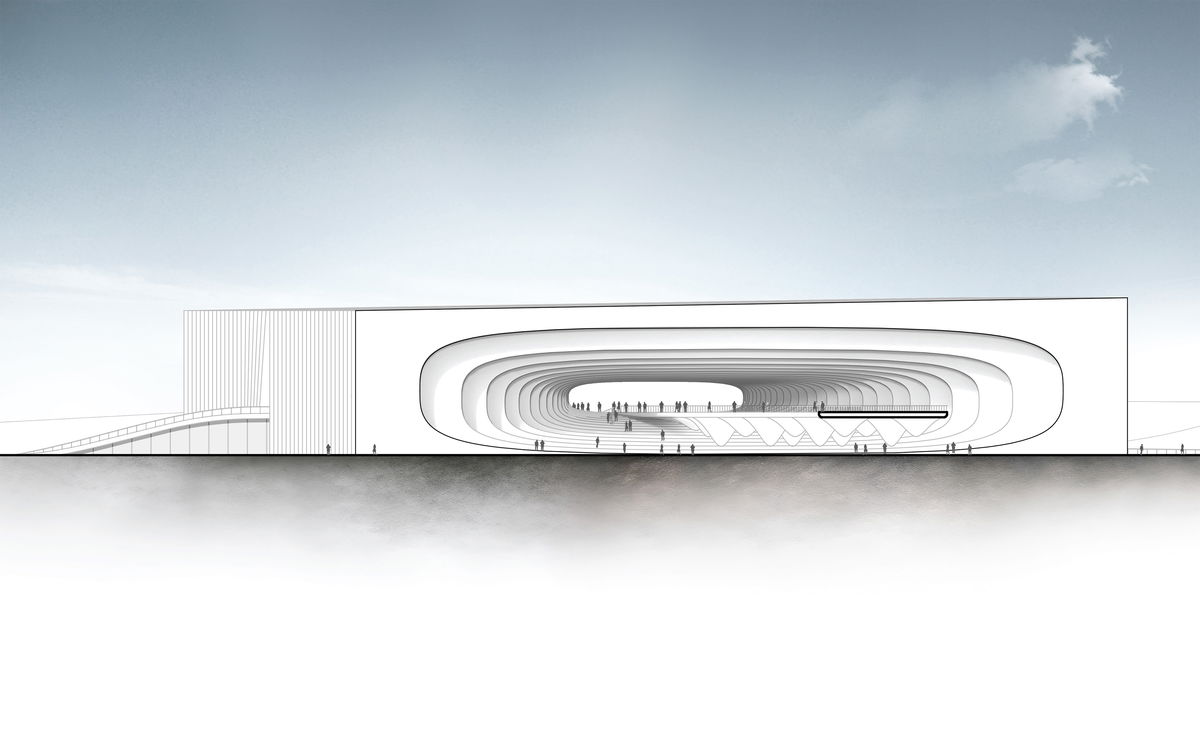
Connections — A direct connection between the train station’s belvedere and the heart of EuropaCity is planned - this bridge pierces the building in its center. Rather than a square tunnel through the building, we propose to form the gateway as a smooth transition from one façade to the other, turning the surface of the museum inside out. The façade will seem to cave in like a loophole from front to back – from the train station to Europa City. This makes it possible to connect the station to the belvédaire, but also to connect the different levels of the plaza, either on the side of the station or on the side of the BIP, to the main entrance of La Porte on the bridge.
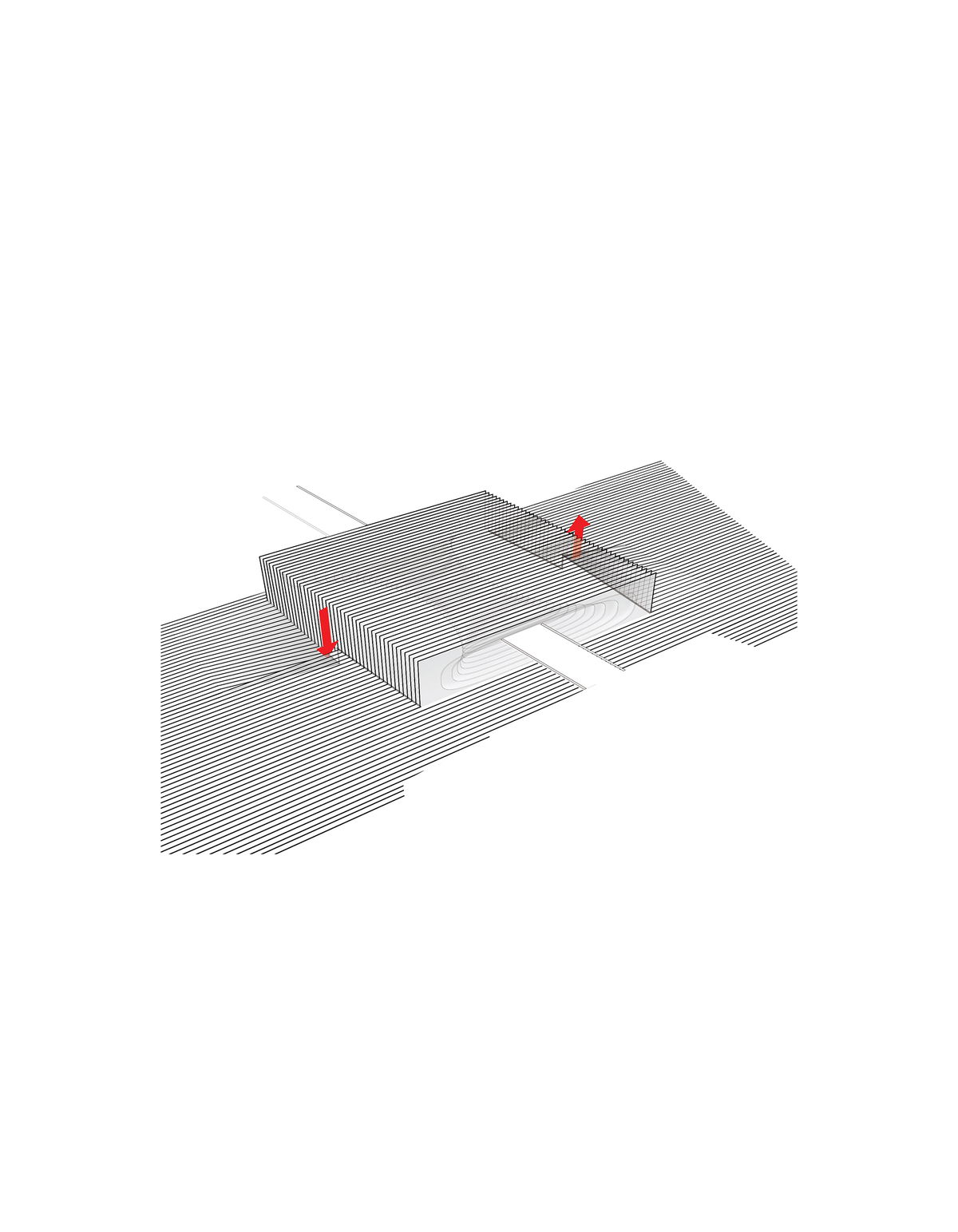
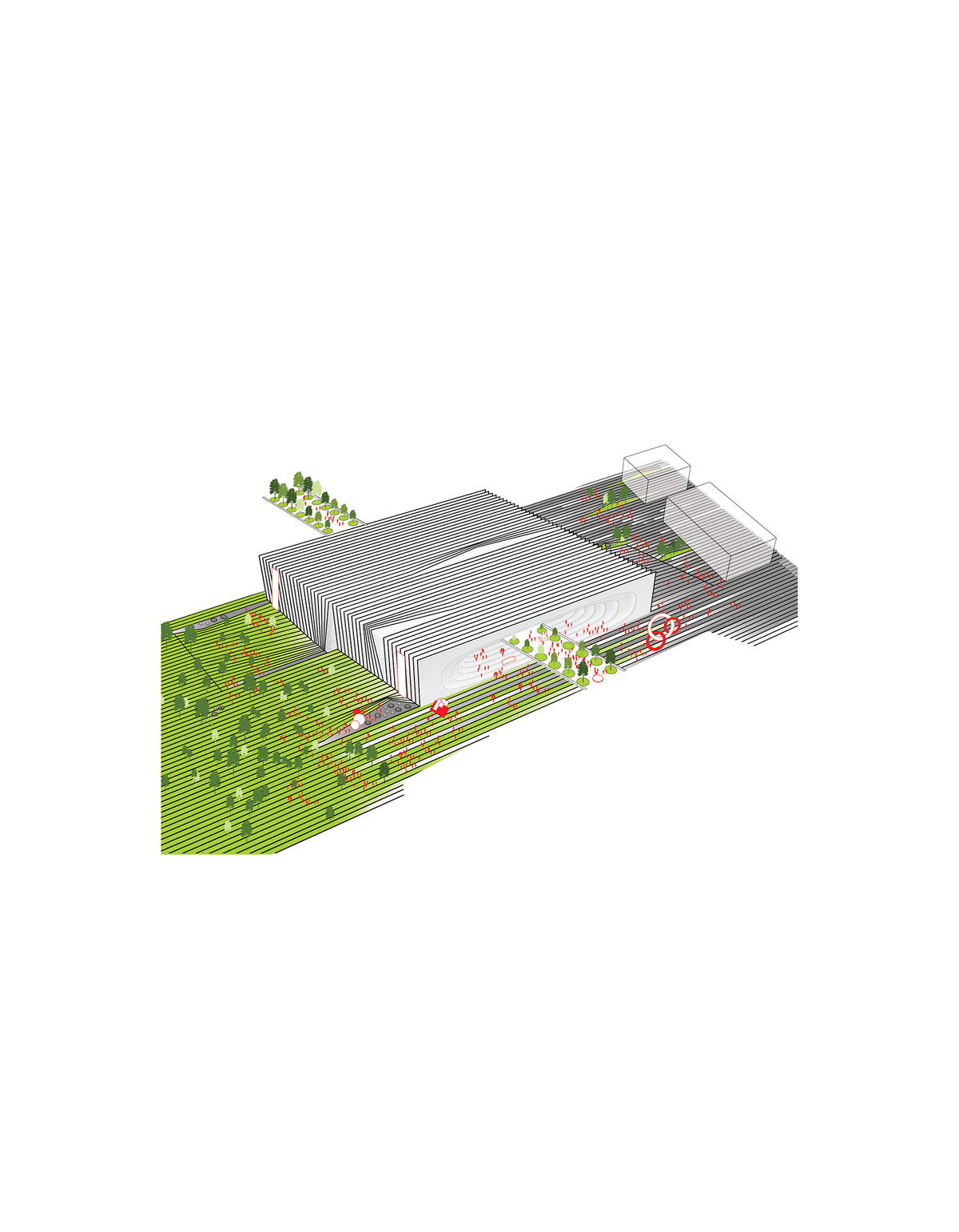
Modeling of Landscape — A landscaping treatment is done. To the East, on the park side, the ground is pushed down creating an outdoor amphitheater. This iteration also brings daylight into the archives at the basement level. On the side of the train station square, to the West, opposite treatment of the landscape is applied. Instead of a push down, the landscape is raised and a hill is created. Its summit connects to the lobby of the project, making possible its direct access from the station square.
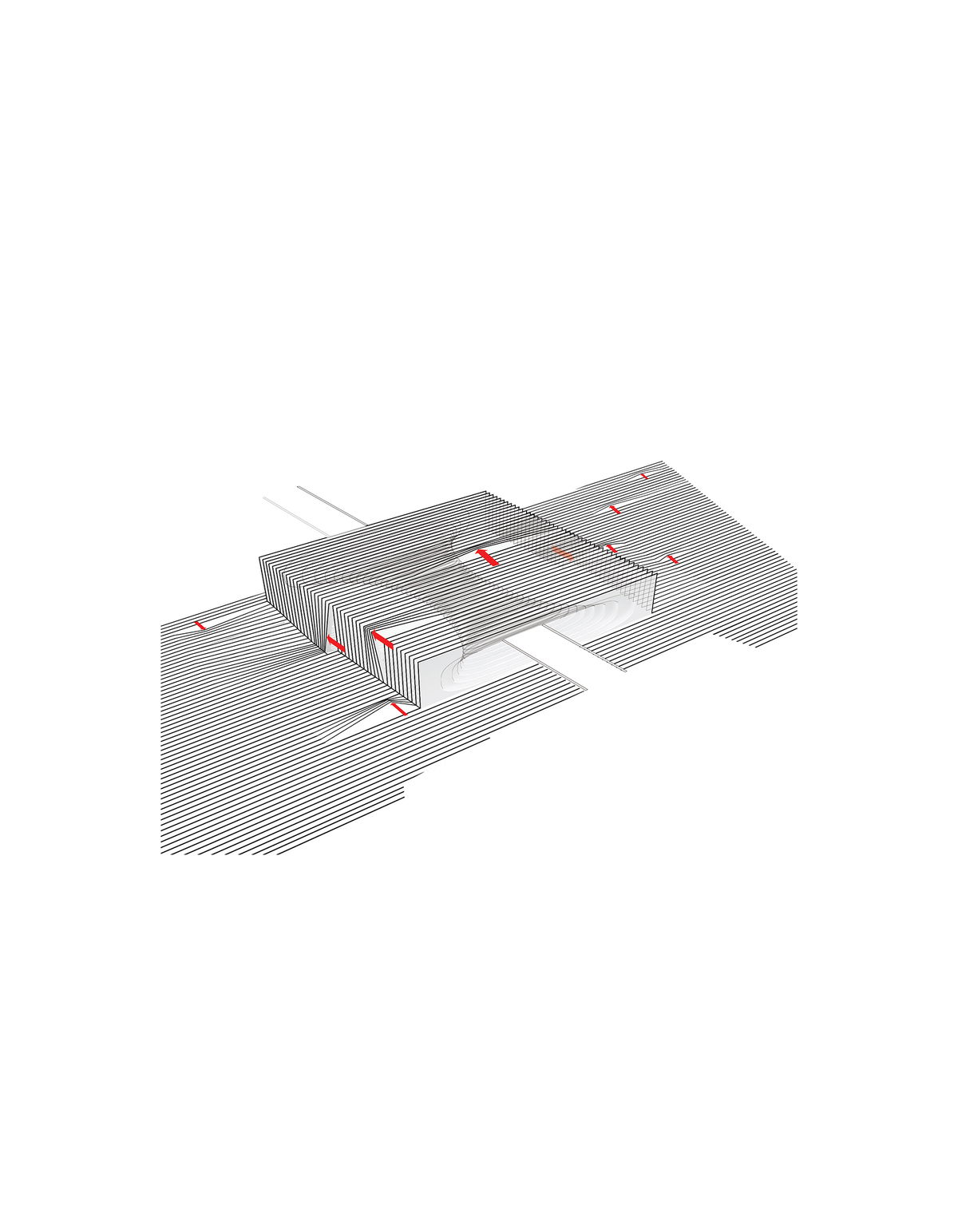
Unveiling of the Frames — Another modification applied to the facades is the punctual unveiling of frames at particular moments. This plays in a fun way with the lines of the project, which have their origin in the bands of EuropaCity. Thus, openings and densities are created at the rhythm of the structure.
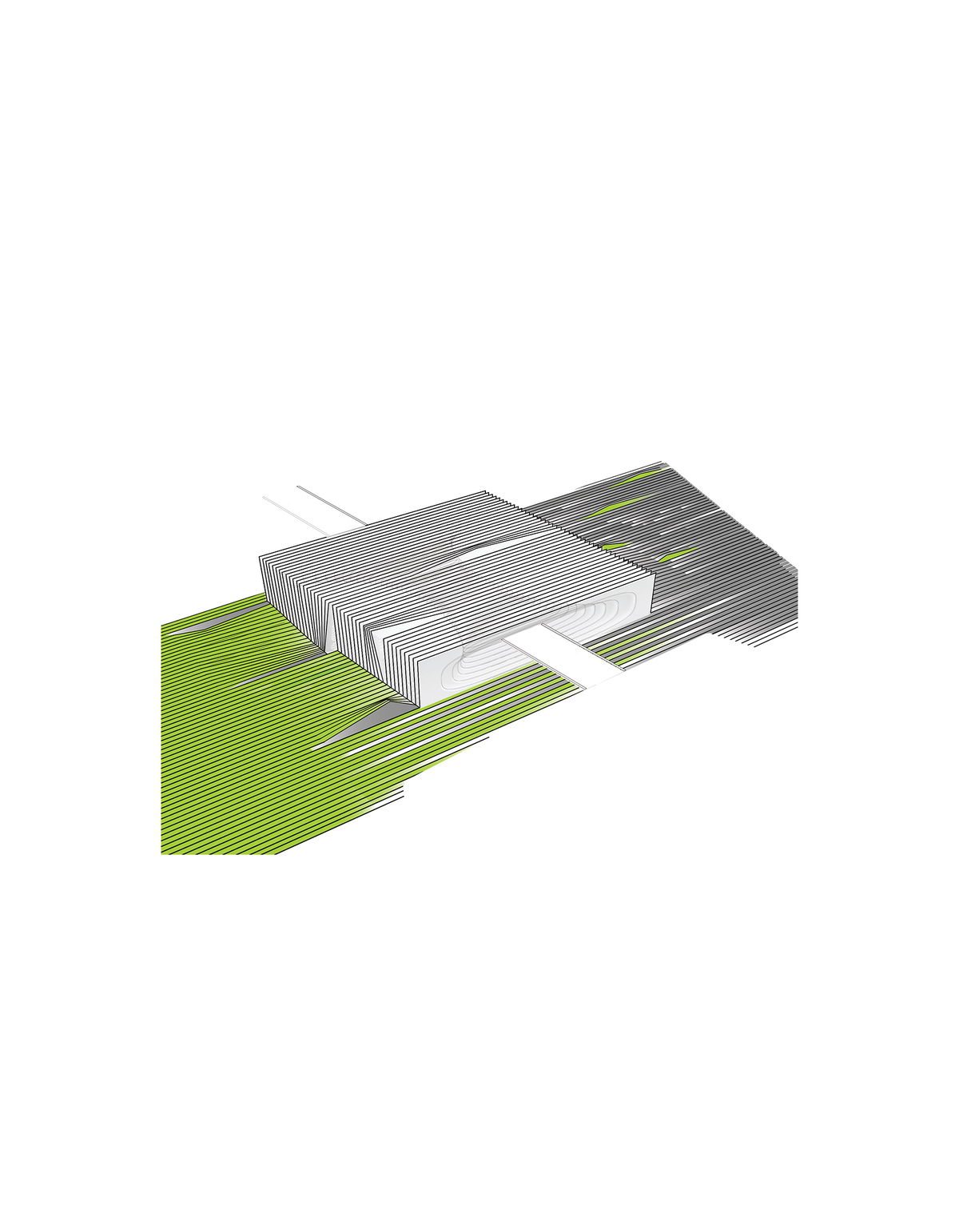
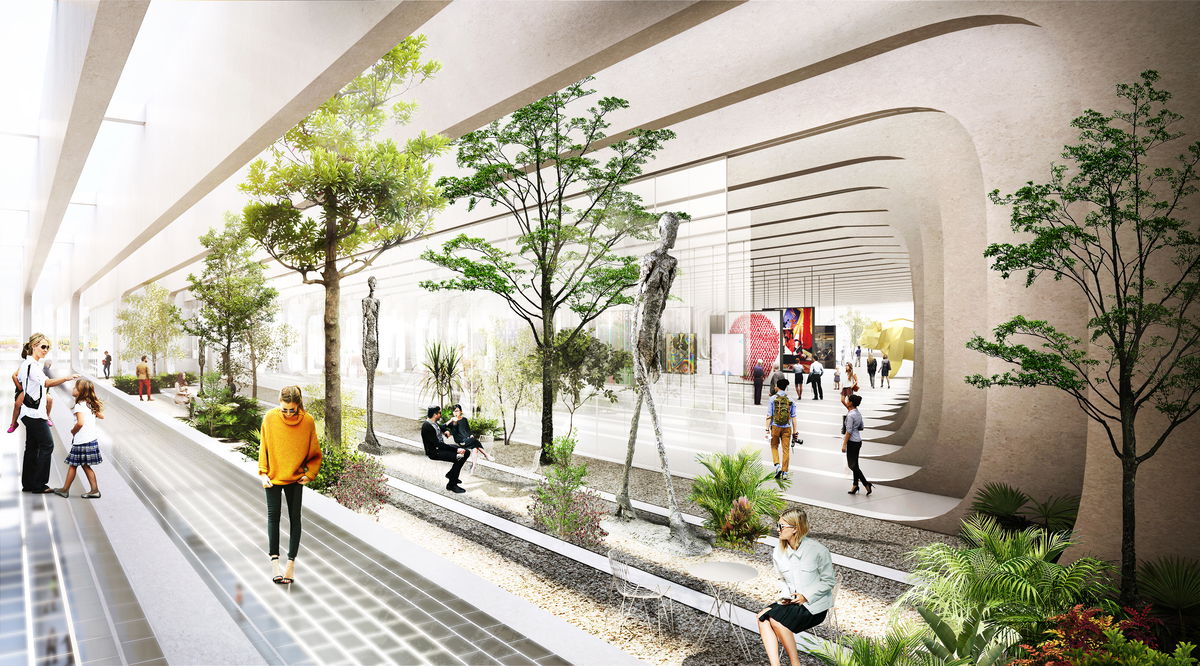
Encounters of Two Landscapes — On the East side of the site, the “coulée verte” is spread out and intertwined with the concrete strips to the building. The west side is mostly mineral, consisting of either concrete pavement or gravel. The transition between these two landscaping areas will be gradual.
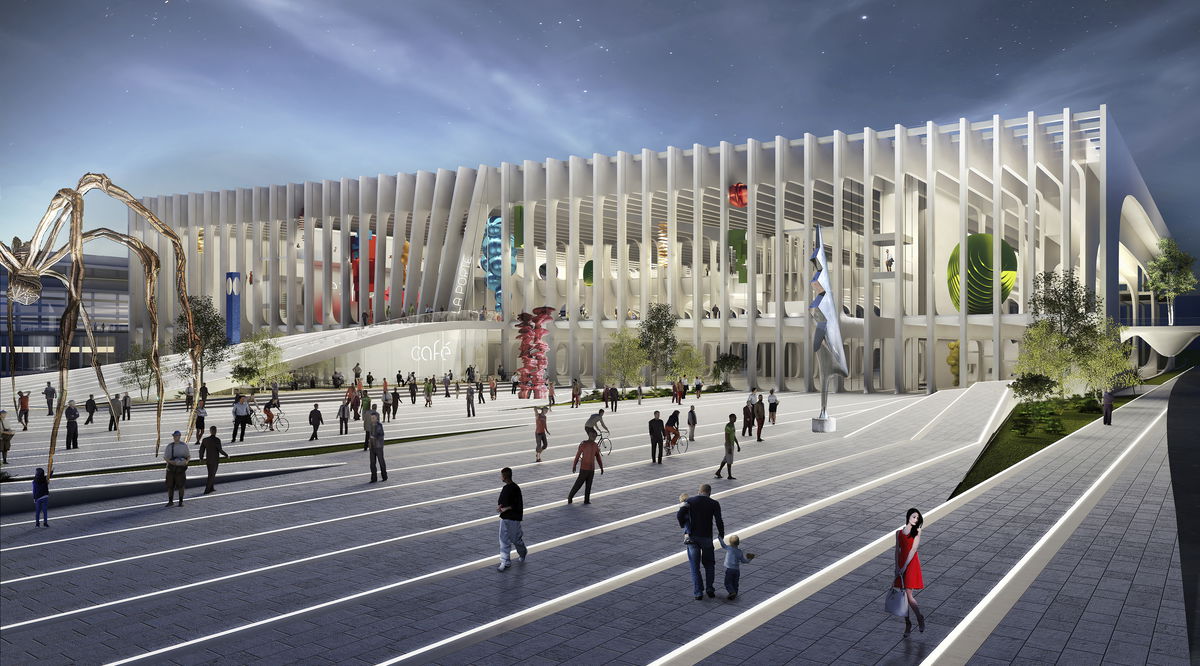
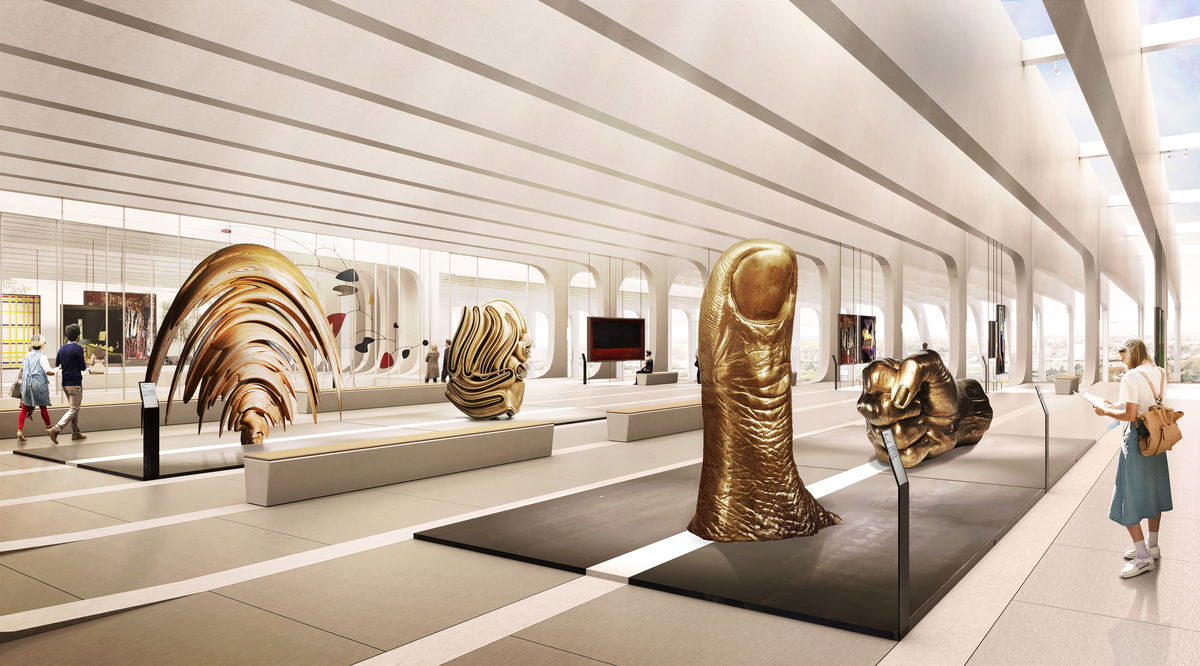
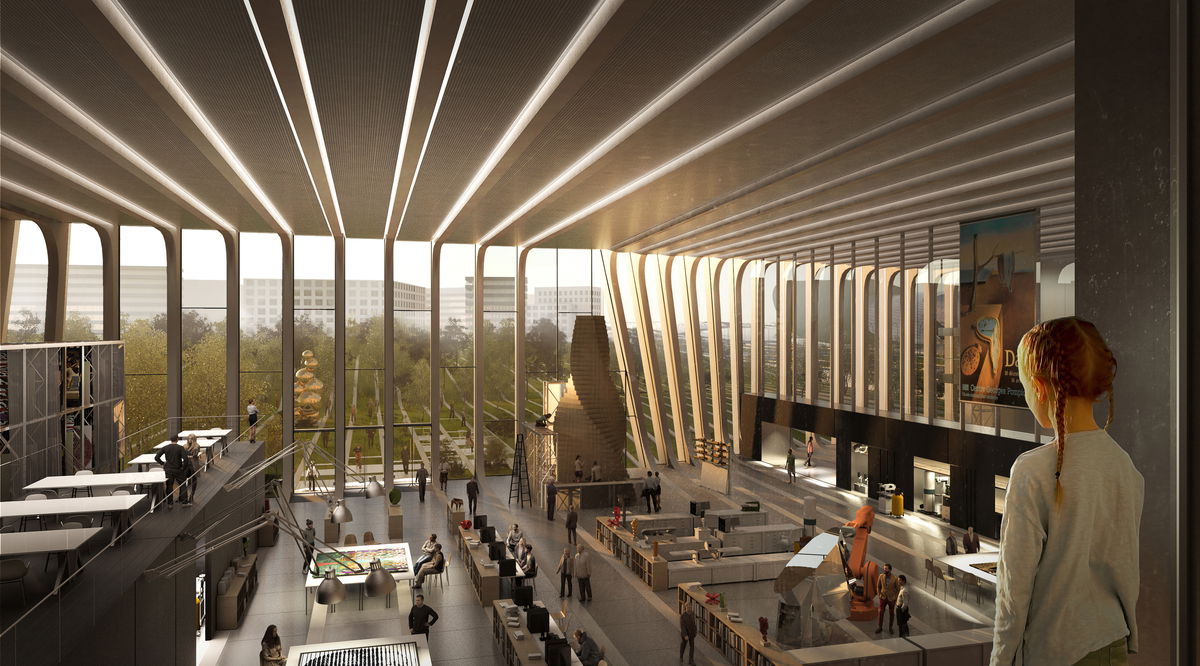
La Porte — As visitors approach Europa City towards La Porte, the character and feel of the building will transform gradually from a solid frame to an open space. As visitors move through La Porte, the frames appear to part revealing inviting views in to the interiors. The East and West facades will be made like giant vitrines of visible storage, allowing the collections to be displayed to the museums exterior. As people pass through, they will find themselves immersed in an art archive surrounding them in all directions. The vast storages that are currently hidden from the public will now populate the façade of the halle forming an urban archive. While the building serves as a gate to Europa City at the urban scale - the open structure of the parallel frames allows visitors to see and move freely through the porous membrane as if by osmosis.









Partner in Charge
Bjarke Ingels
Jakob Sand
Project Leader
Gabrielle Nadeau
Robert Grimm
Project Team
Dominika Trybe
Lucas Stein
Mattia Di Carlo
Raphael Ciriani
Sarkis Sarkisyan
Semiha Toptas
Yehezkiel Wiliardy Manik
Collaborators
dUCKS scéno
BMF