
Fira Barcelona Business Hub
Barcelona, Spain
Client
Fira Barcelona
Typology
Work
Size m2/ft2
16,000 / 172,223
Status
In Design

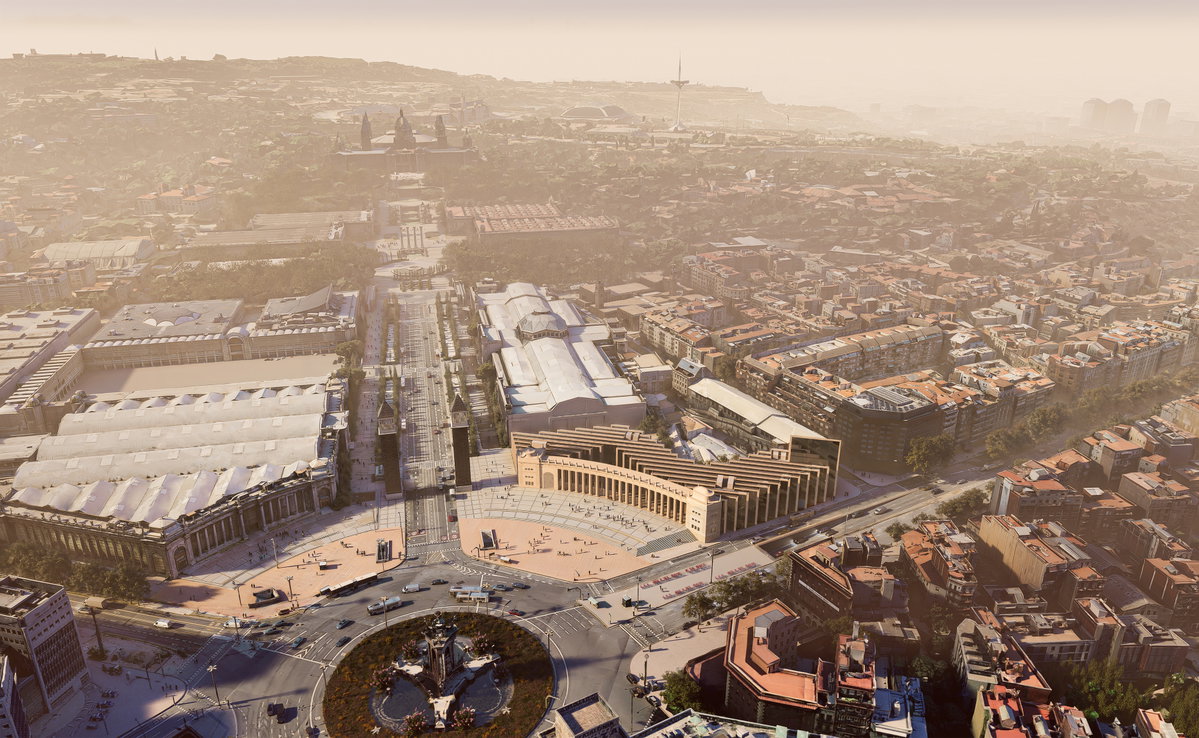
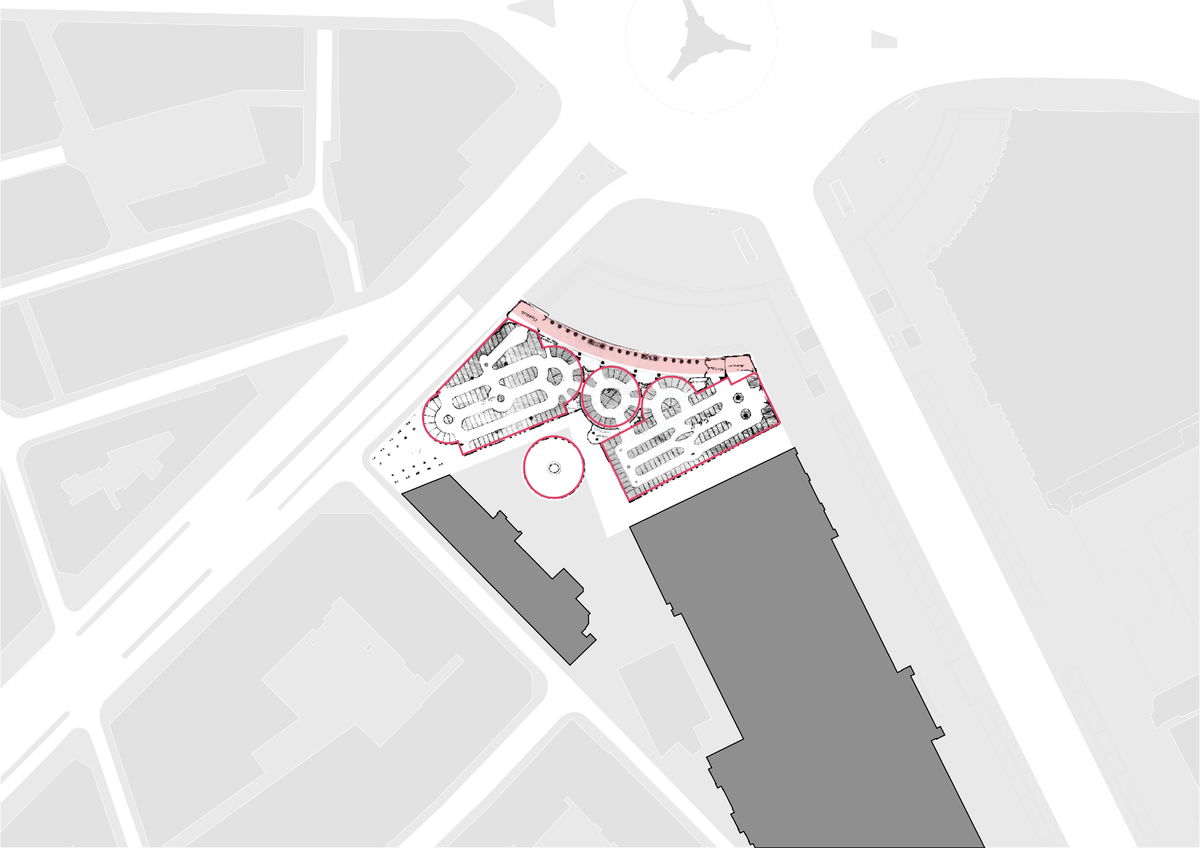
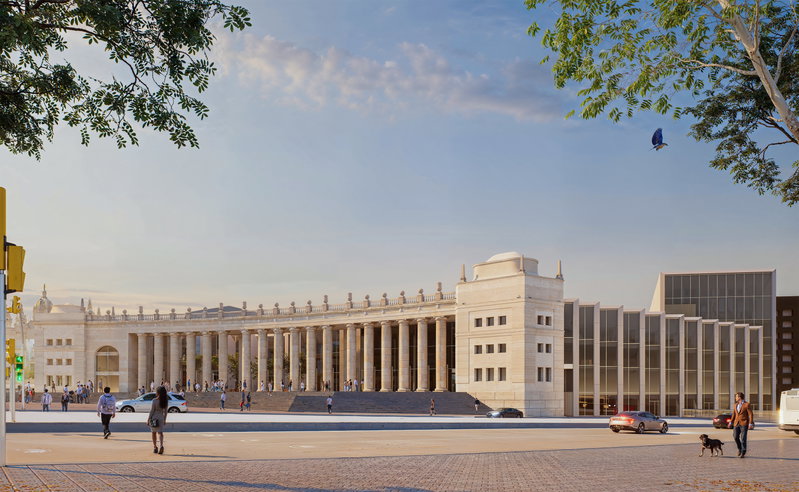
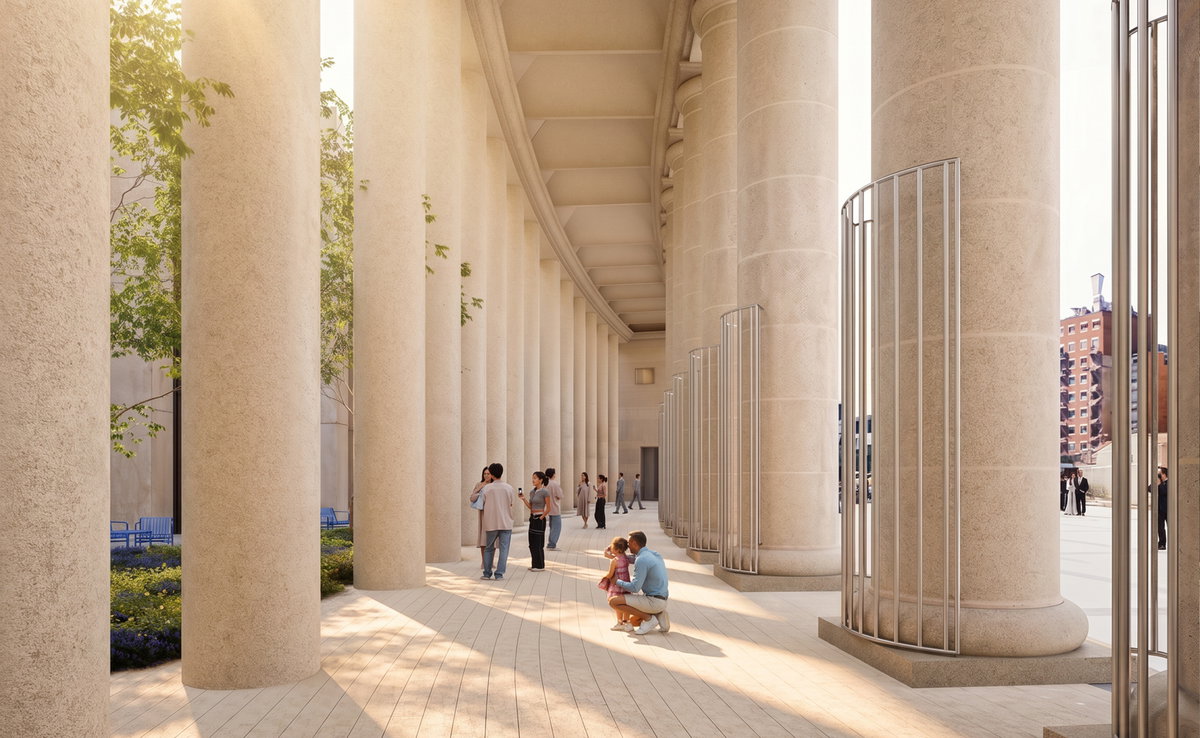
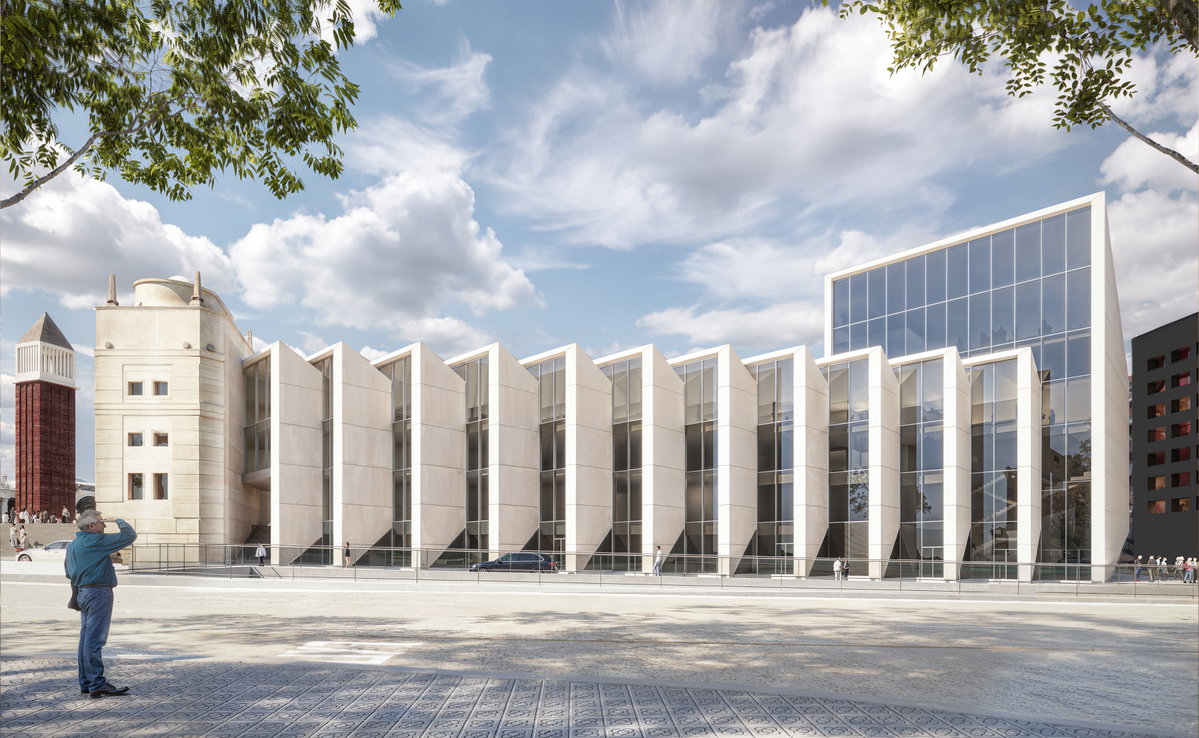
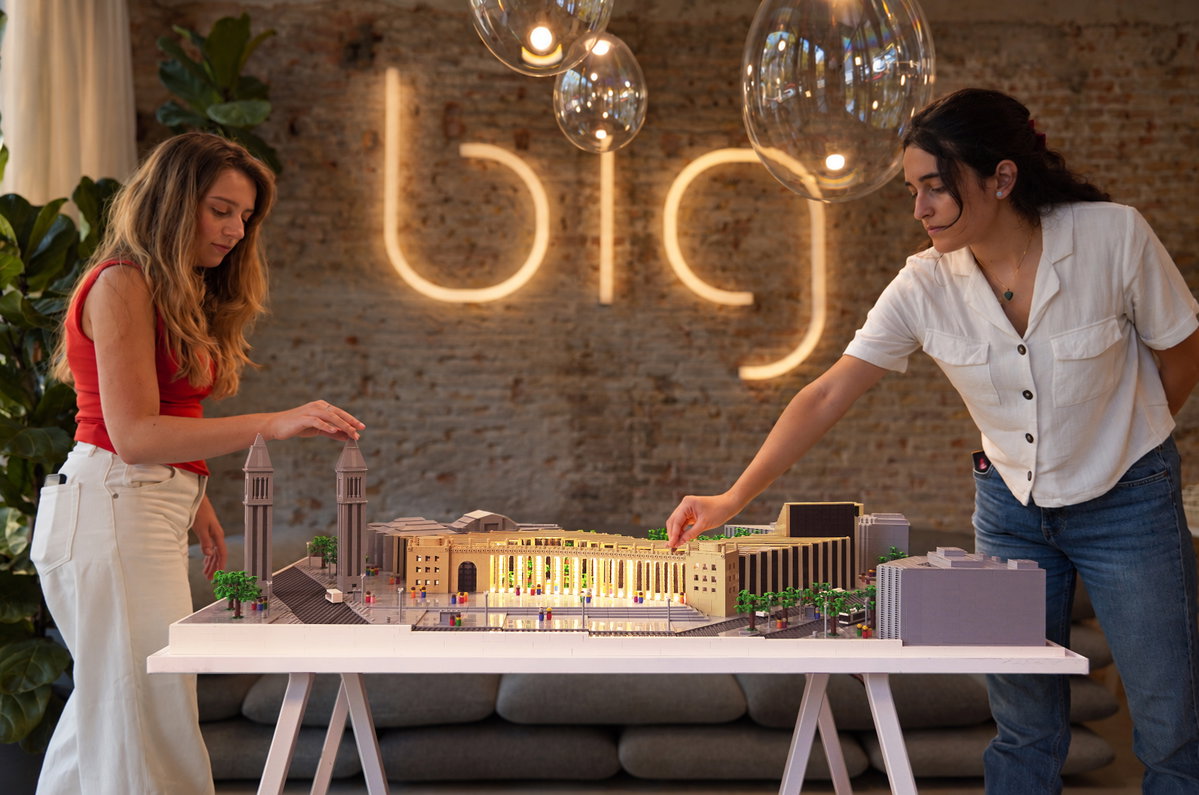
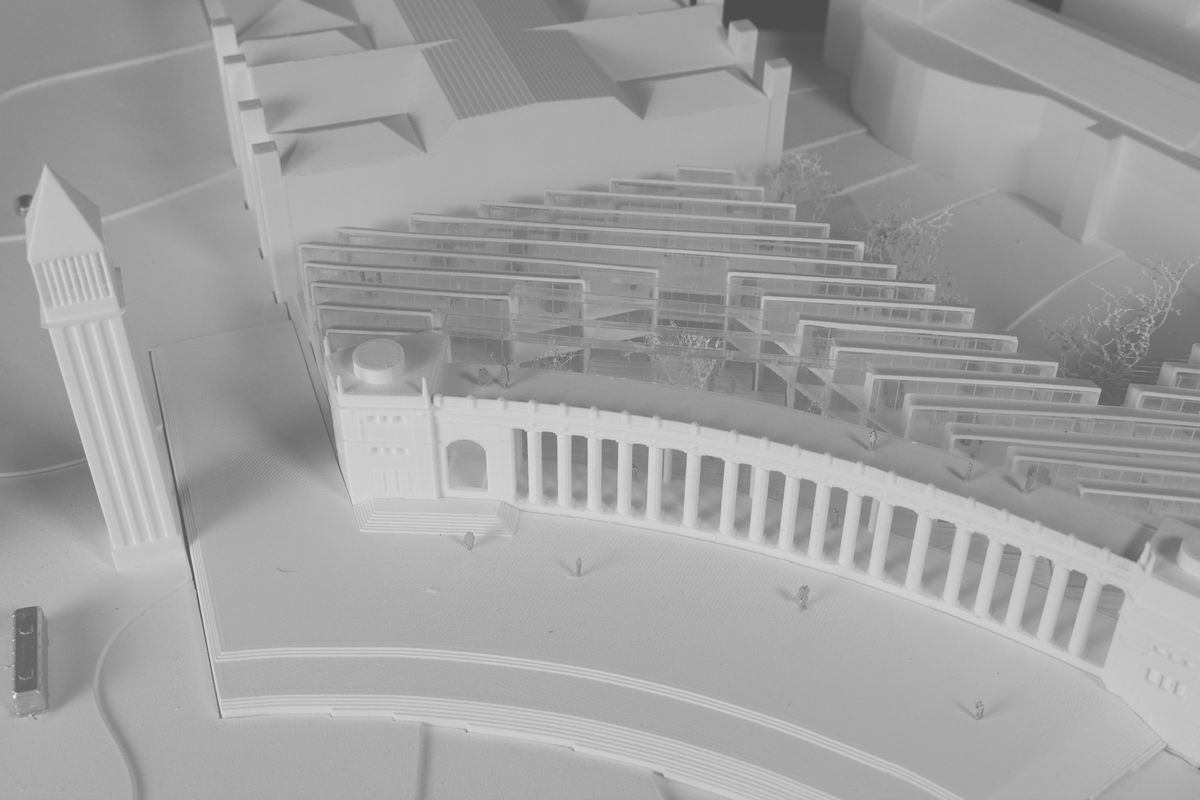
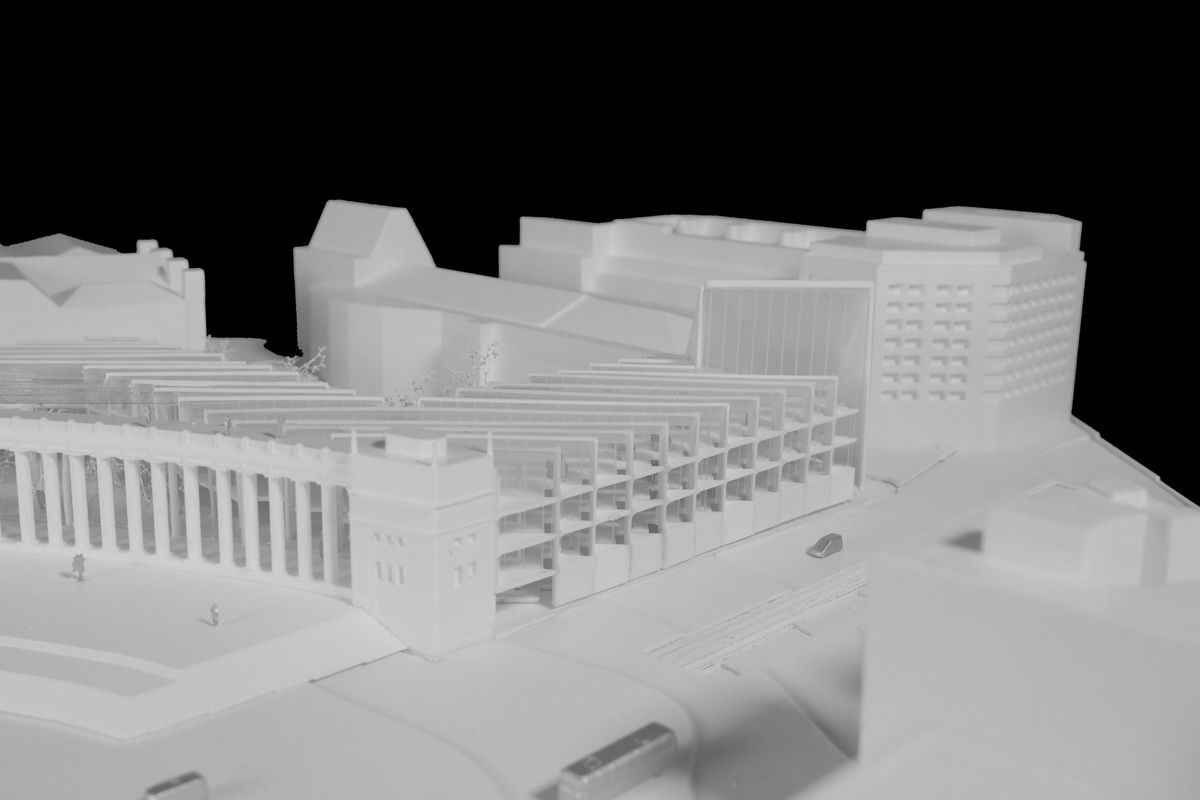
ORIGINAL BUILDING BY JOSEP MARIA JUJOL — The redevelopment draws inspiration from the architectural evolution of the Fira, referencing Josep Maria Jujol’s original vision. His concept featured two distinct structures connected by a central circular space, crowned by a dome and integrated with the portico. Building on this concept, the project introduces a central space that links the portico, the Fira and a future courtyard.
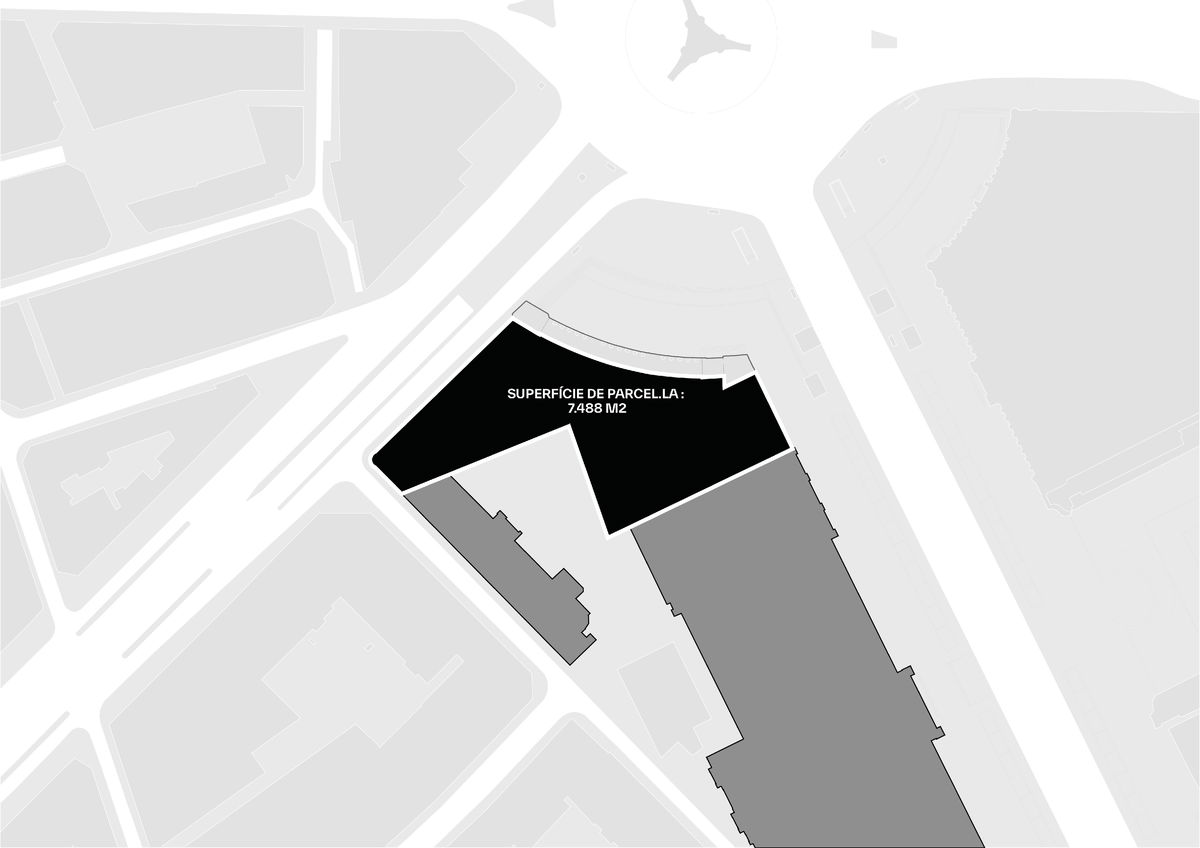
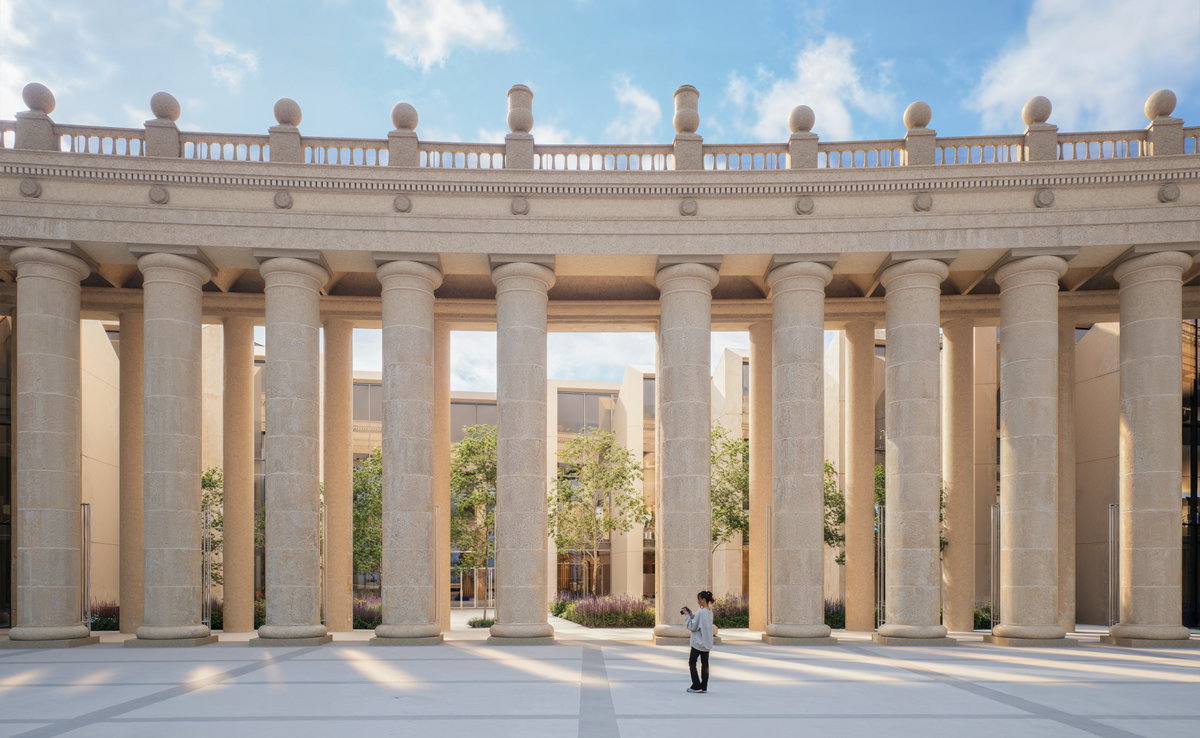
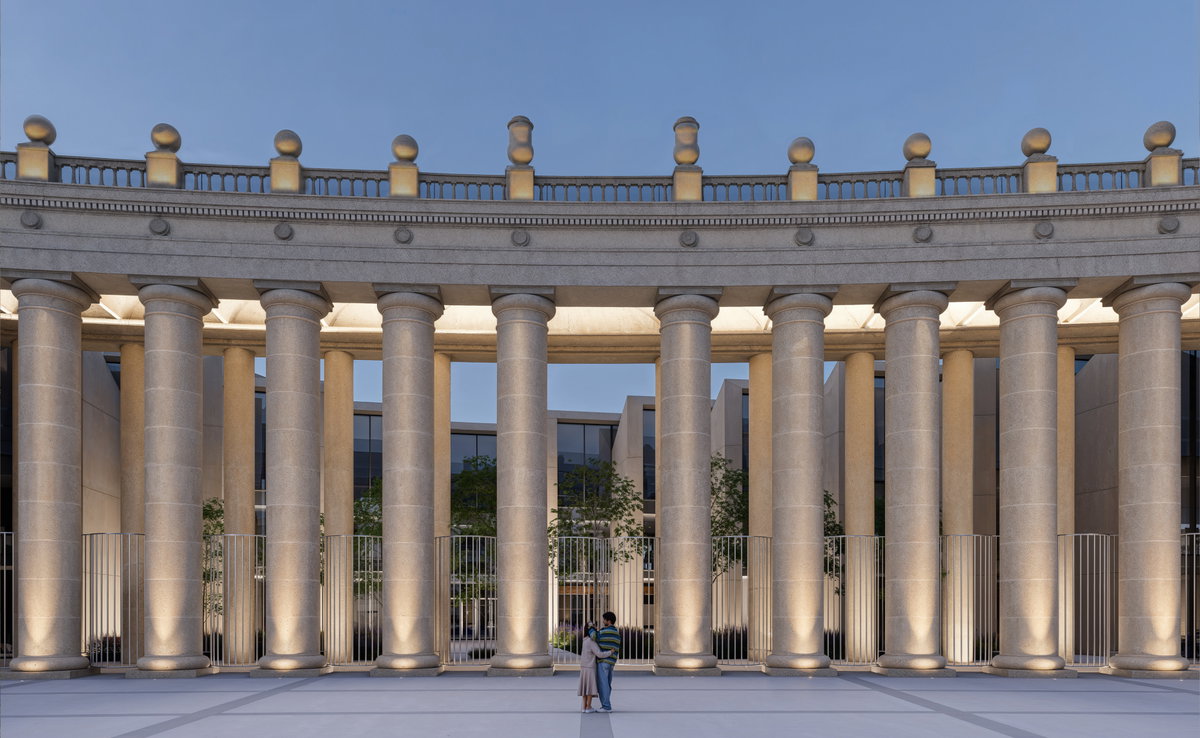
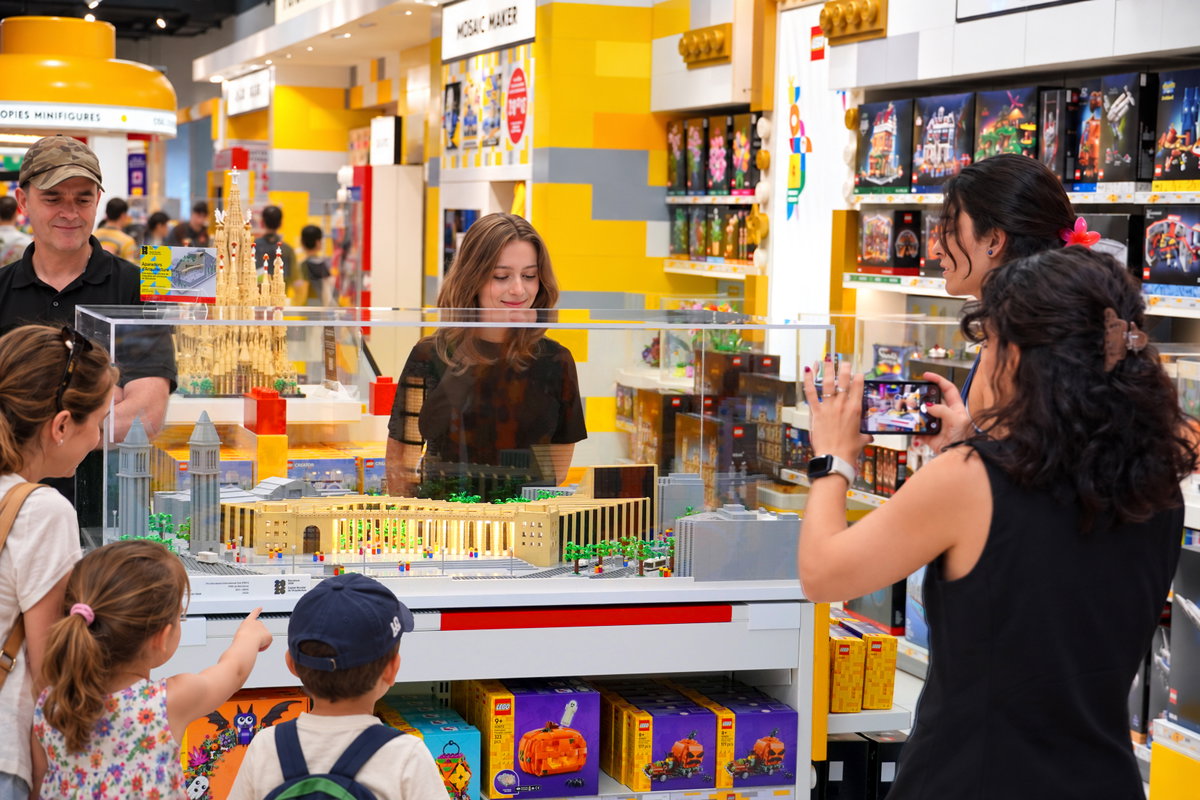
SITE & CONTEXT — The site extends from Gran Via to the Palau de la Metal·lúrgia, ending at Plaça de Maria Cristina. Covering a total of 7,488 m², the plot incorporates the existing colonnade, which remains a key element in the transformation.
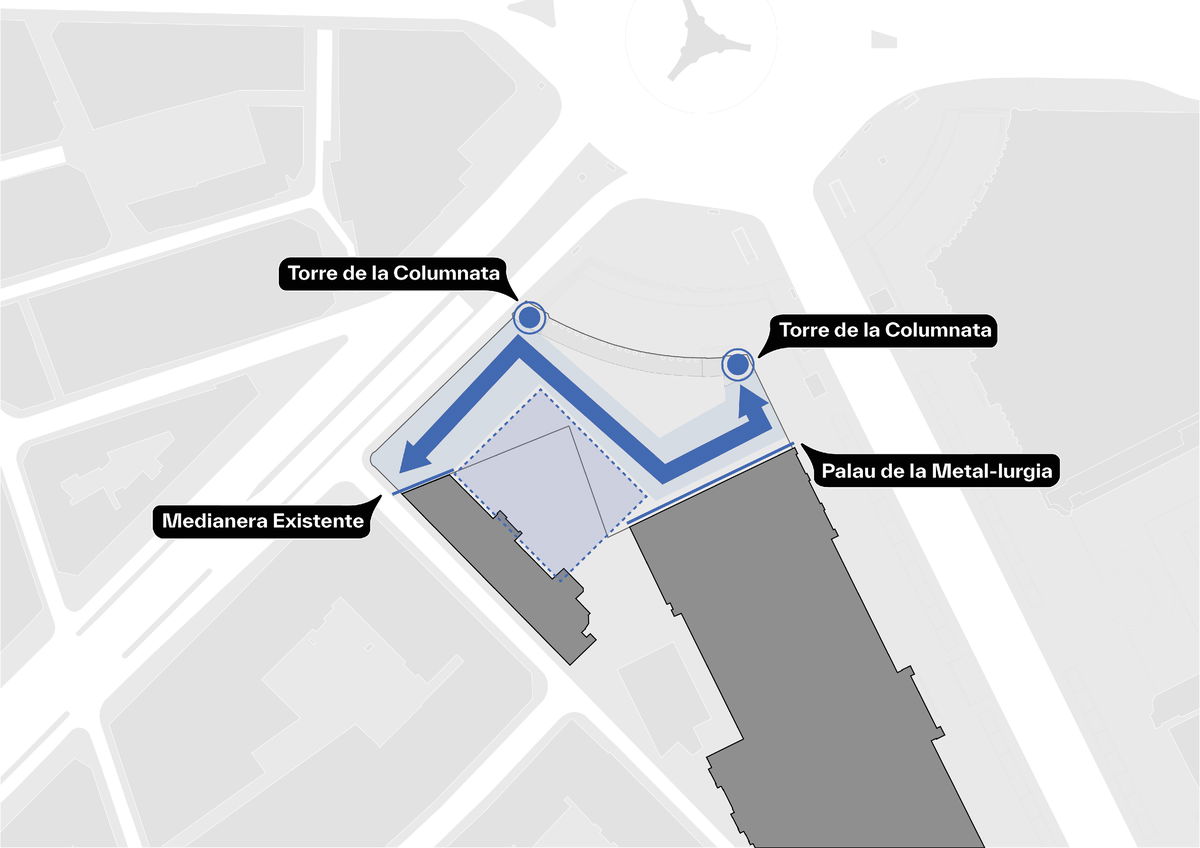
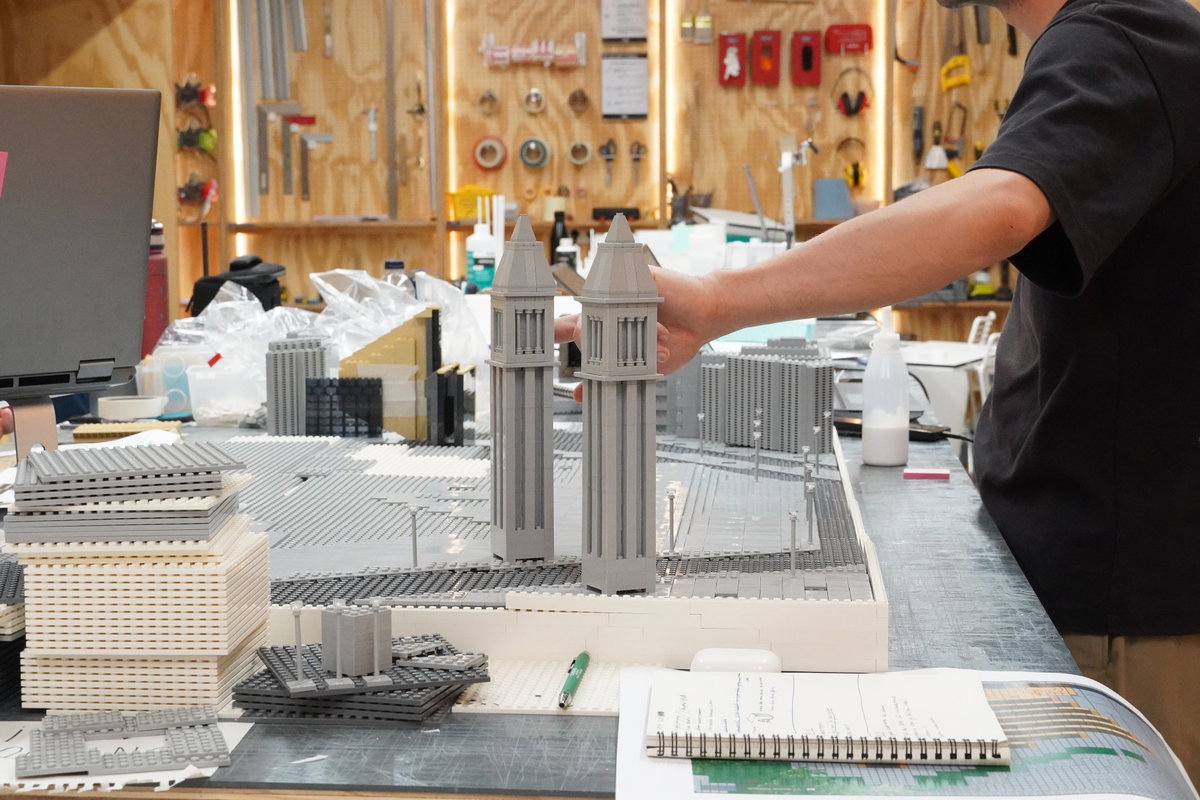
CONNECTING PAST AND PRESENT — The project establishes a dialogue between past and present, revitalising the site while preserving its historical elements. Anchored to the tower of Maria Cristina and aligned with the Palau de la Metal·lúrgia, the design extends towards the colonnade, reinforcing its presence within the urban fabric of Gran Via.
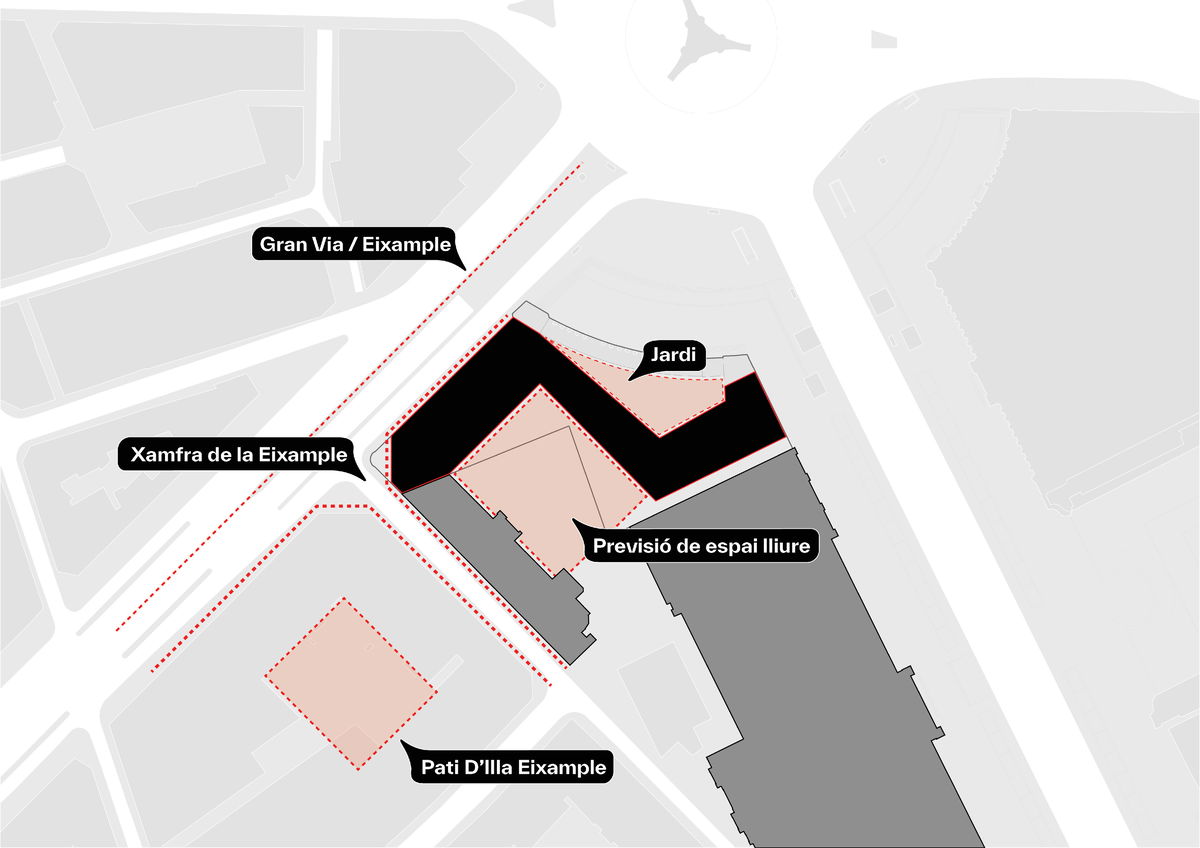
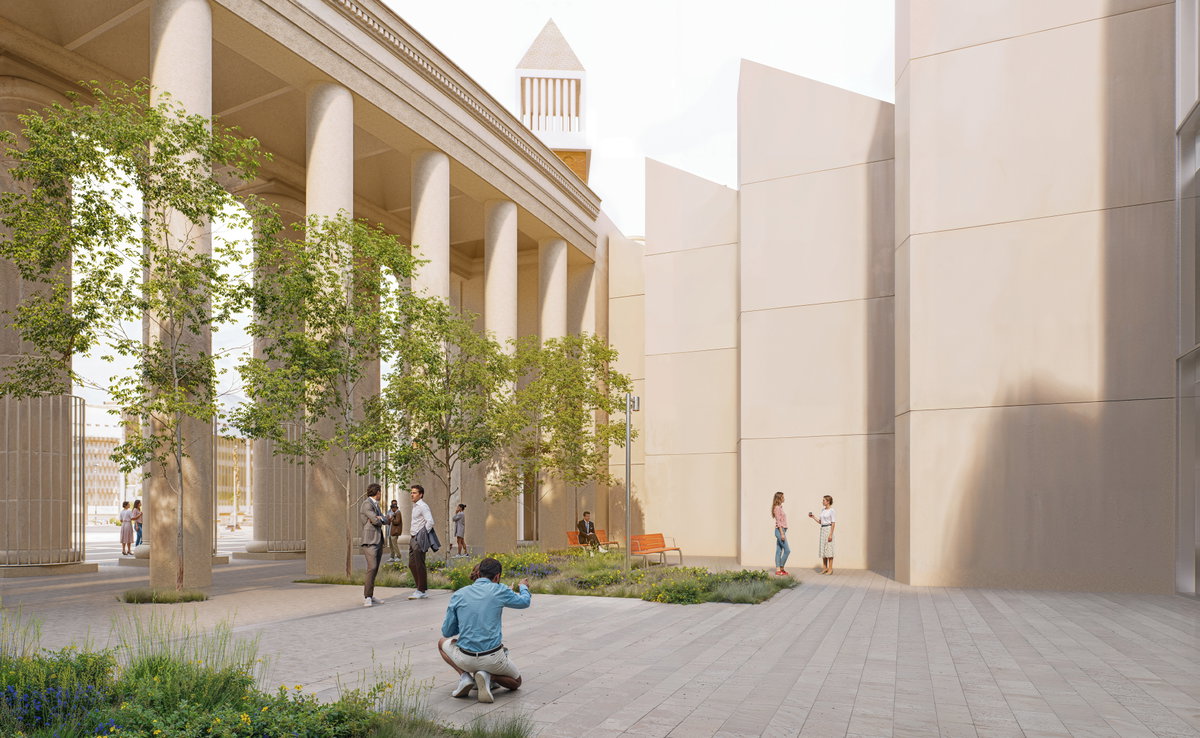
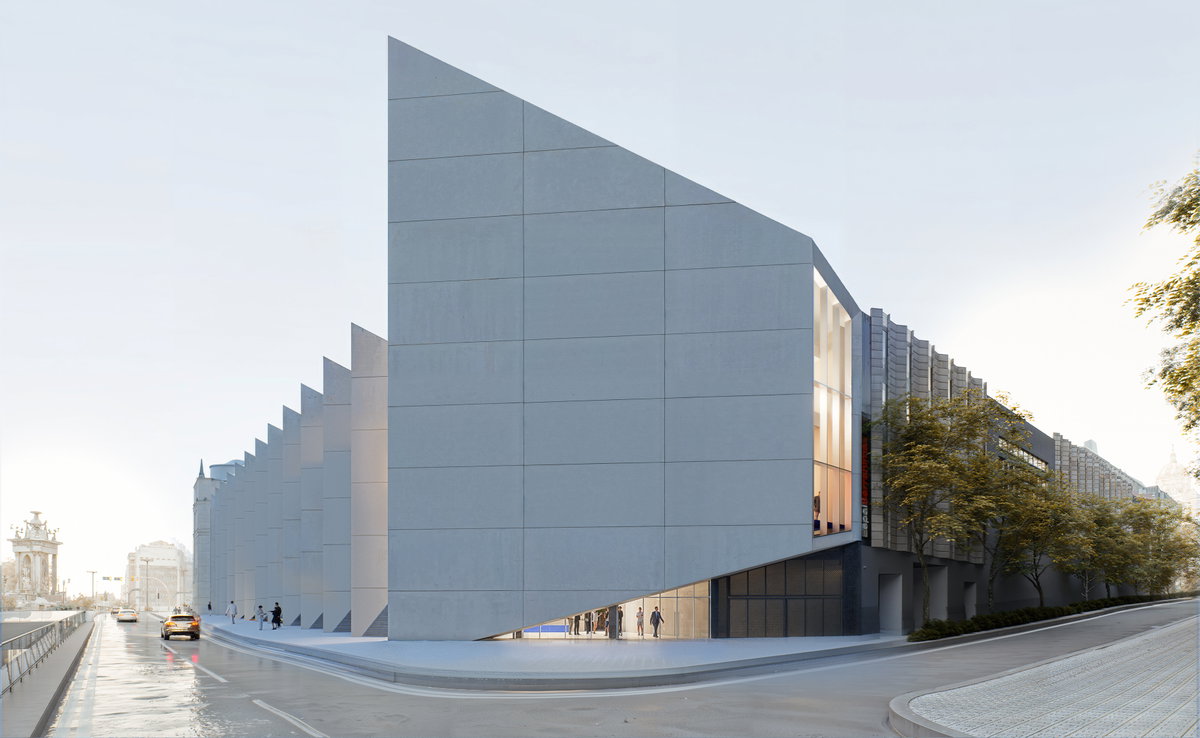
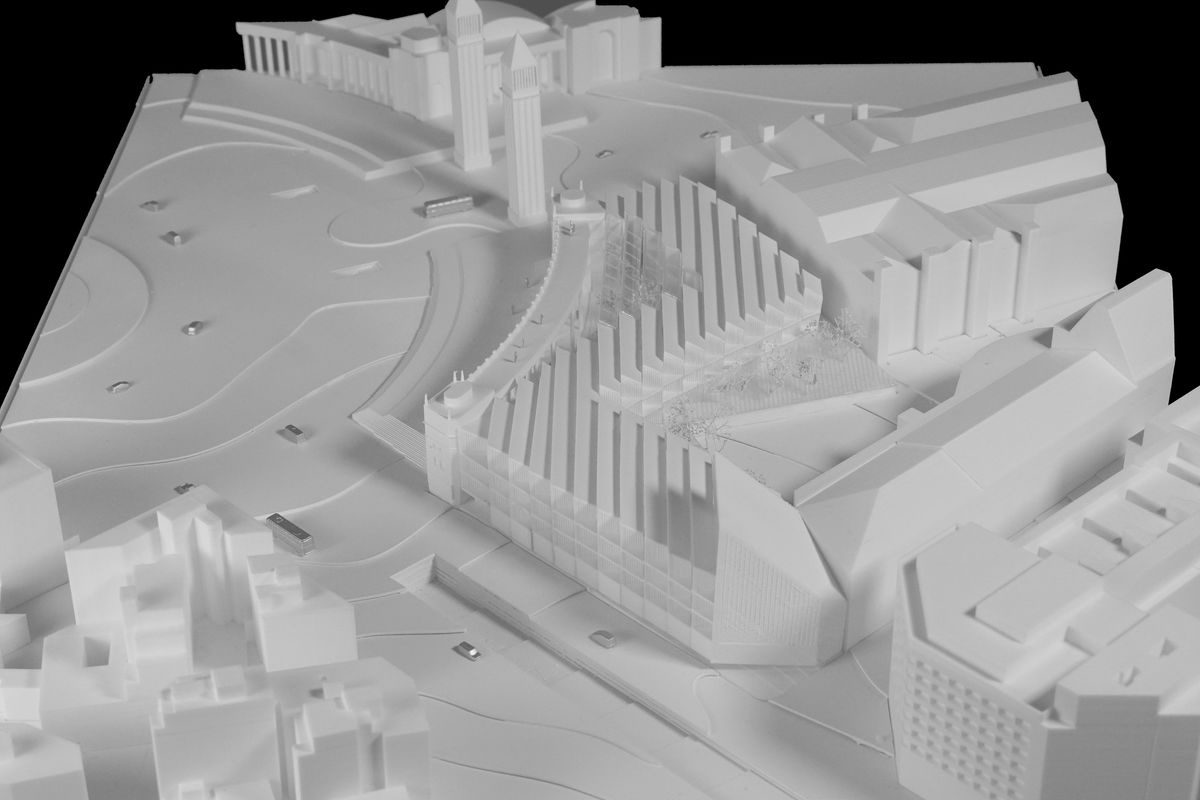
A PROJECT FOR BARCELONA — Designed to connect with its surroundings, the project transforms the site into an engaging public space. The building’s form carves out an open area between the colonnade and the structure, inviting pedestrian movement and interaction. Additionally, the proposal reconfigures the urban block structure of Gran Via, introducing a courtyard at its core.
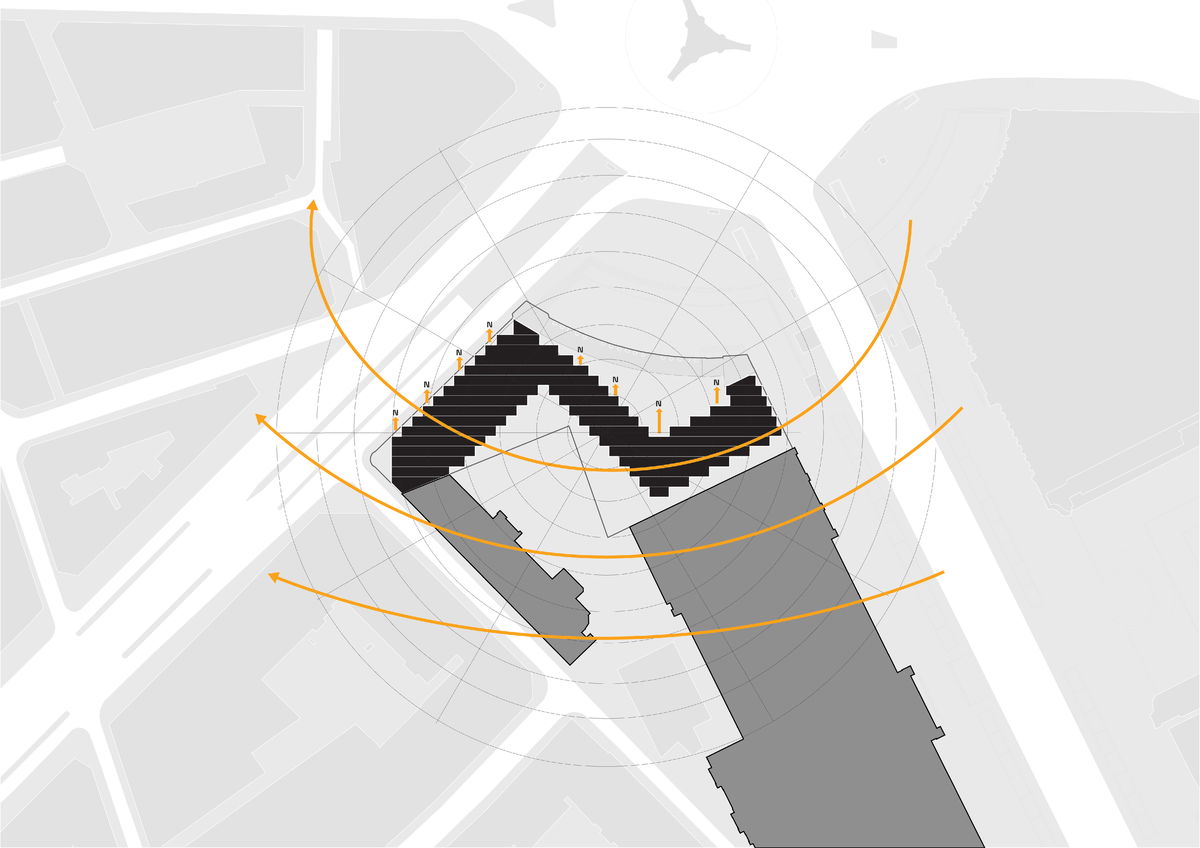
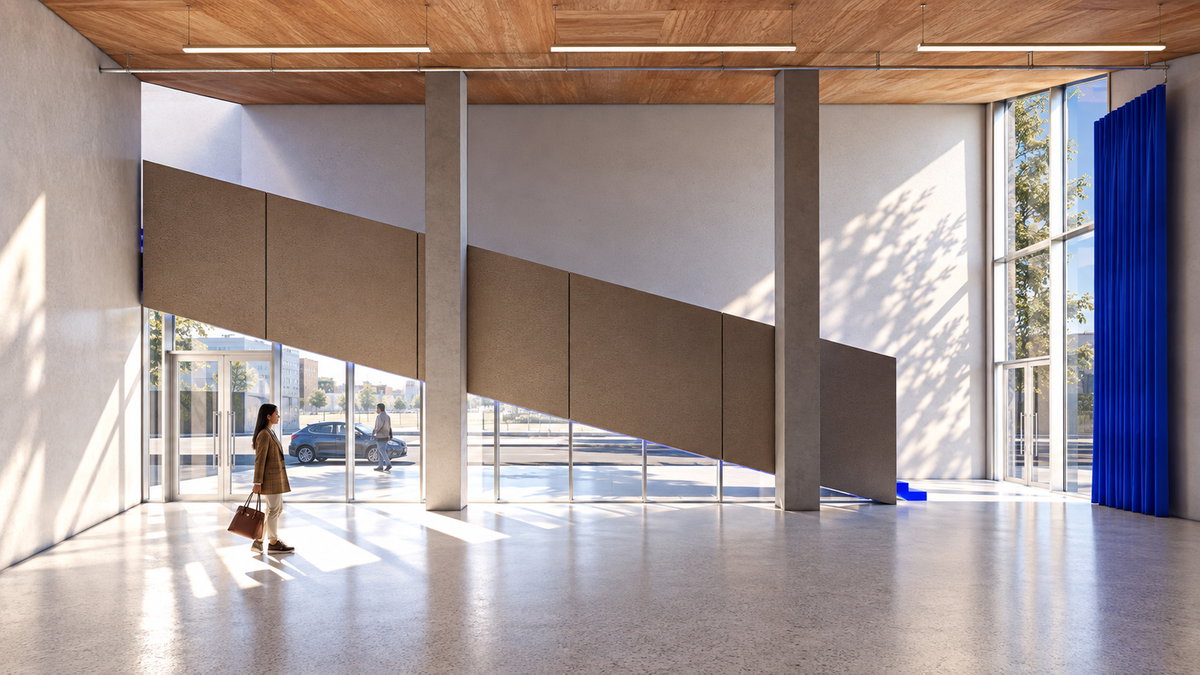
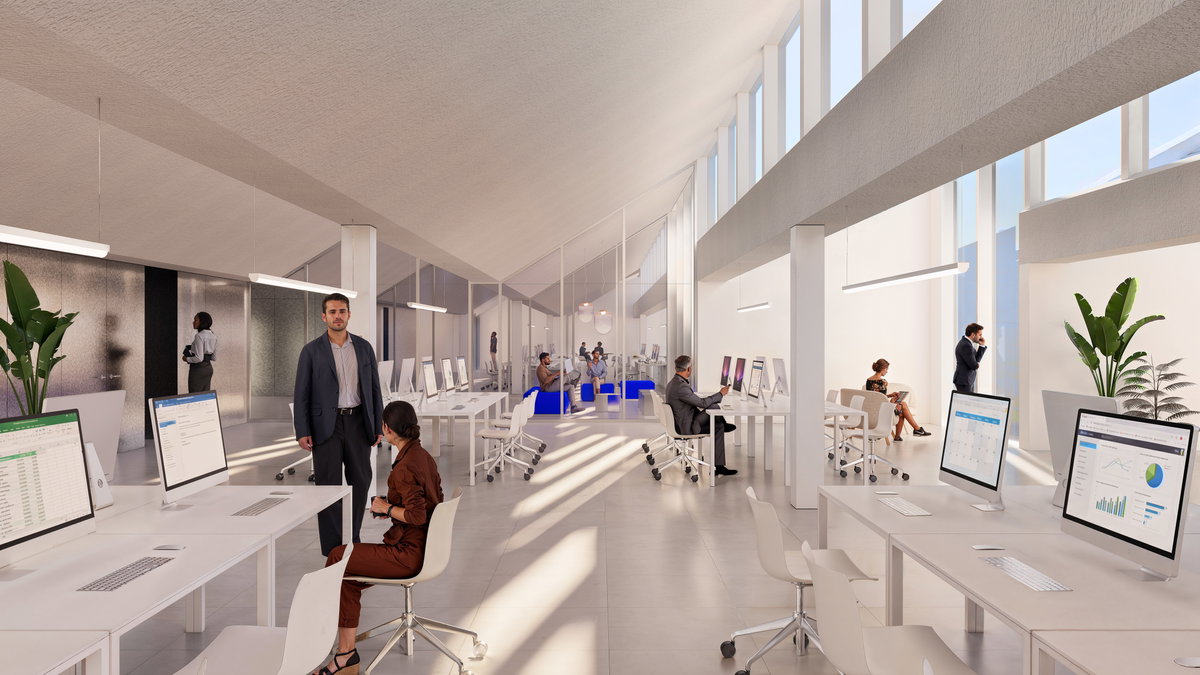
OPTIMIZED ORIENTATION — The building is structured into four-meter-wide structural bays, aligned to a true north orientation. This approach maximizes daylight while reducing heat gain. The roof features solar panels that contribute to the building's operations.
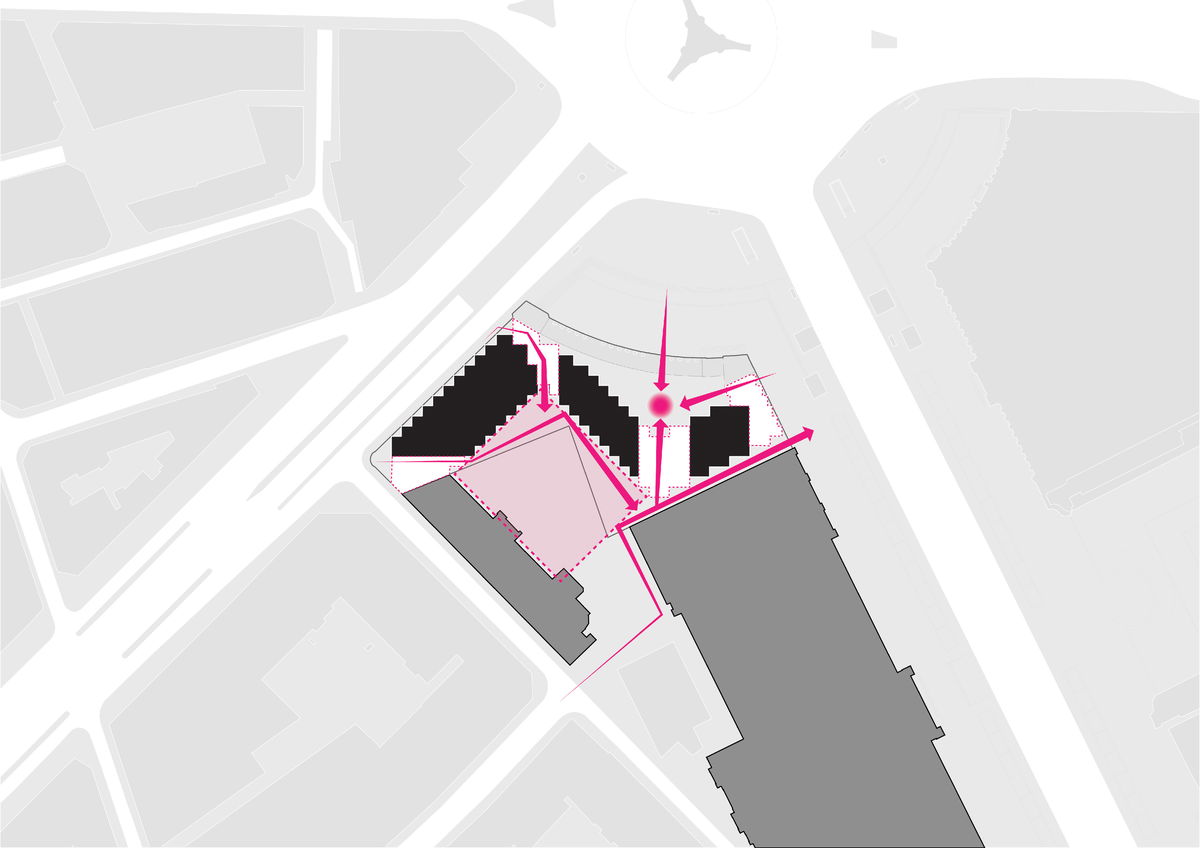
NEW URBAN CONNECTIVITY — At street level, the building opens at key points, improving circulation within the site and strengthening links with the surrounding city.
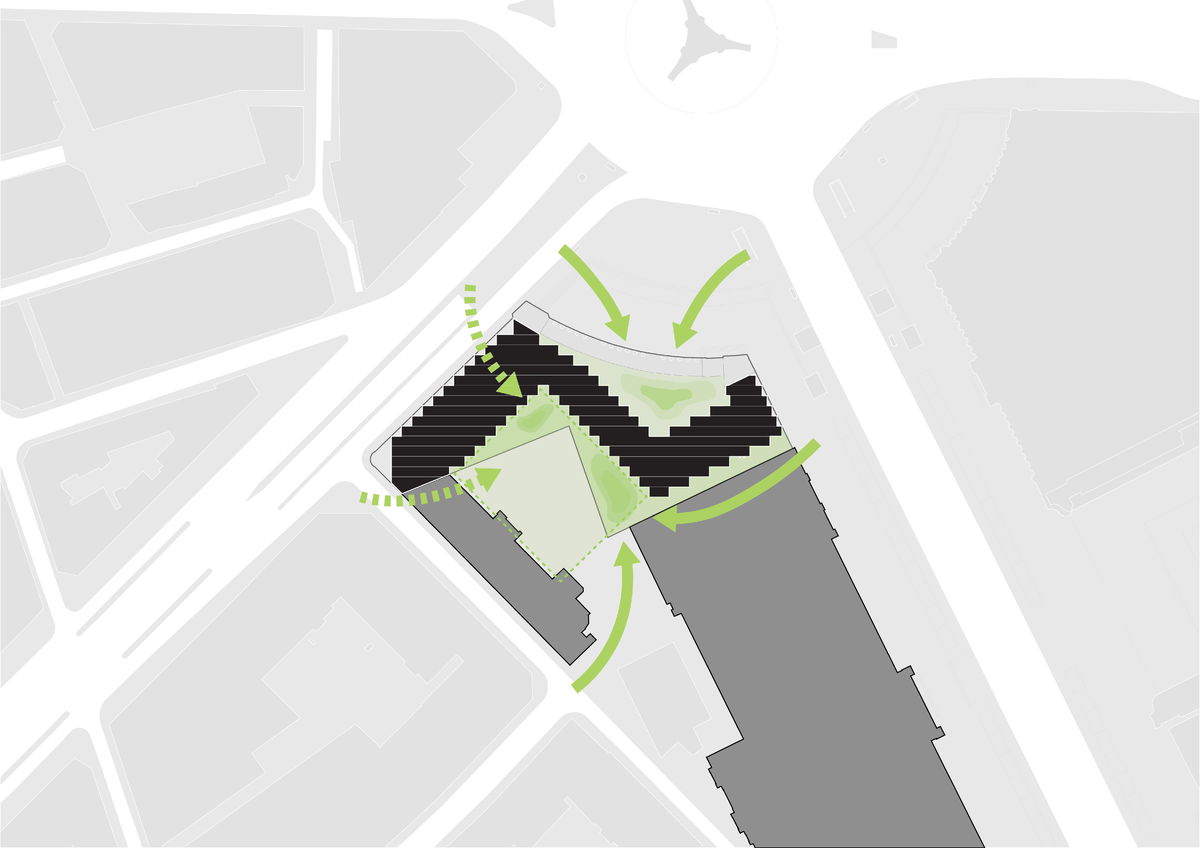
A NEW COURTYARD FOR THE CITY — The shape of the building generates two key openings to the city - one at the front, between the colonnade and the building, and another at the rear. These open spaces form urban gardens reminiscent of Barcelona’s characteristic interior courtyards, creating an interplay between nature and architecture.







Partner in Charge
Agustin Perez-Torres
Bjarke Ingels
Project Manager
Igor Russo
Project Leader
Paula Pagès Camprubí
Pietro Saccardi
Project Architect
Laura Nieto
Luis Delgado
Project Team
Beatriz Diaz-Guerra Estrader
Camila Antonella Mina
Eleni Kanellopoulou
Kasia Kretek
Noemi Mastalli
Pablo Rodríguez de Medina
Paula Gonzalez
Pilar Serratosa
Rodrigo Iglesias
Collaborators
MIAS Arquitectes
G3
Schlaich Bergermann Partner
Socotec
PGI